


The recent bombing death of a Russian general has in ways overshadowed the ongoing peace talks between Ukrainian and U.S. officials, who are attempting to find common ground as the war in Eastern Europe is bound to hit the five-year mark.
Ongoing discussions at U.S. President Donald Trump's Mar-a-Lago property in Florida aimed to finalize a 20-point peace plan supported by U.S. authorities that they believe could end the war. The meeting between Trump and Ukrainian President Volodymyr Zelensky came days after Lt. Gen. Fanil Sarvarov, a senior architect of Russia’s military training doctrine, died when a bomb detonated under his SUV in Moscow.
Investigators opened a murder case and suggested Ukrainian intelligence services might be responsible, though no group has claimed the attack and Kyiv has not acknowledged involvement. The violent timing of the incident coincides with a diplomatic push, played upon the backdrop of consistent missile barrages and continued battlefield attrition on both sides of Russia and Ukraine. Another recent series of strikes inside Russia hit an oil terminal, aircraft, and ships deep behind the front lines.

Sarvarov's Death
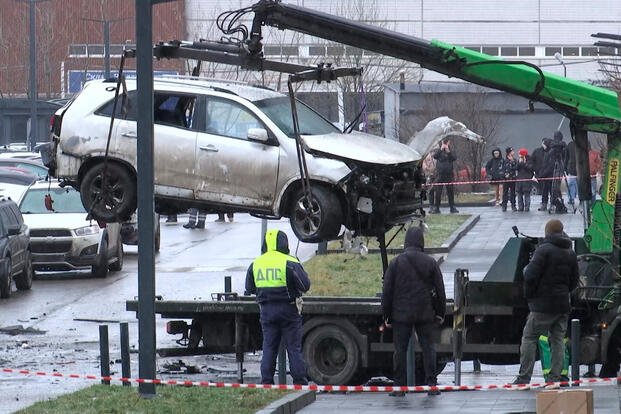
The SUV of Fanil Sarvarov reportedly exploded shortly before 7 a.m. on Dec. 22.
The 56-year-old had directed the Russian General Staff’s operational training directorate, shaping doctrine and field readiness across Russia’s forces. His programs set the training calendar for new brigades rotating toward Eastern Ukraine and guided refresher cycles for units depleted by combat. He helped design exercises in Syria and training regimens now used to harden infantry for urban fighting and drone-heavy front lines.
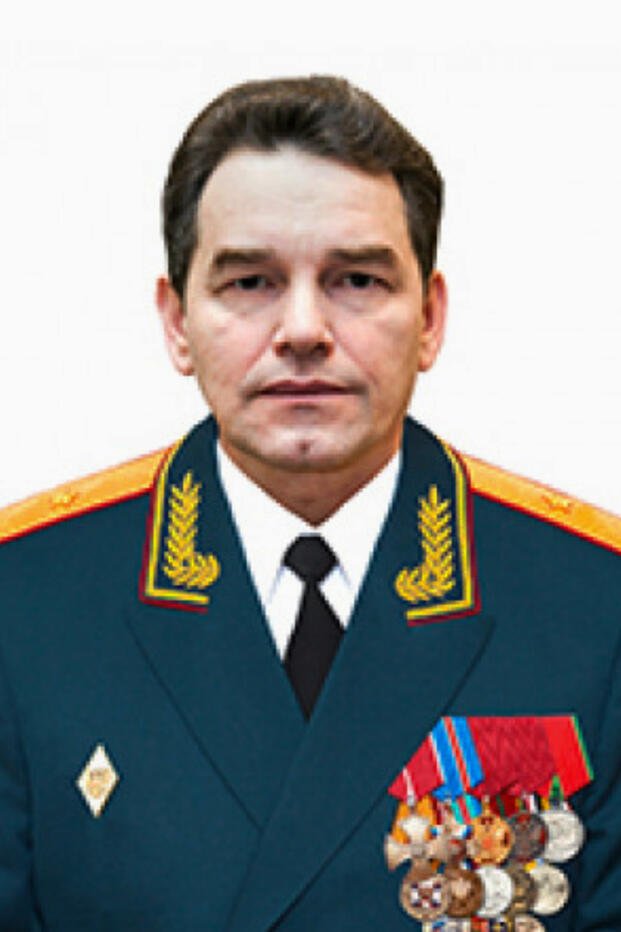
Sarvarov is the third Russian general killed by an explosive device since last year. Previous blasts killed Lt. Gen. Igor Kirillov and Lt. Gen. Yaroslav Moskalik, the latter of whom was killed near his home in an explosion in April near Moscow.
Ukrainian officials, when asked about the Sarvarov attack, did not acknowledge involvement. Russian officials have not confirmed whether the explosive was attached to the vehicle or detonated remotely, or have not revealed whether surveillance footage captured a suspect.
Peace Talks Under Fire
The 20-point peace plan includes territorial terms in eastern Ukraine, phased security guarantees, international monitoring of border regions, and economic stabilization measures aimed to rebuild critical infrastructure.
Senior U.S. officials said the framework would require Russia to halt major combat operations before any demobilization or sanctions relief. It would place foreign observers at key checkpoints if both sides agree to a ceasefire, they added.
Zelenskyy said he would consider a demilitarized zone around contested eastern regions if international monitors and binding guarantees anchor the agreement. He has already floated the idea of a demilitarized belt in Ukraine’s industrial heartland that would push Russian forces away from major cities while outside guarantors underwrite reconstruction and long-term security.
The Kremlin dismissed the concept and said Ukraine must accept that Russia will not abandon annexed territory.
Russian Deputy Foreign Minister Sergei Ryabkov said Moscow would not sign any peace agreement “right now,” warning Western powers against steering Kyiv toward terms that contradict Russian security demands.
Trump called ongoing discussions “the closest this war has ever been to ending,” arguing that his personal rapport with both leaders could drive movement where traditional diplomacy has stalled. Zelenskyy, meanwhile, said peace “cannot be negotiated under terror,” pointing to the missile barrage that arrived hours before his flight.
Trump also spoke with Russian President Vladimir Putin before hosting Zelenskyy and described that conversation as “very productive,” signaling his belief he can bridge gaps that have frustrated earlier efforts to end the fighting.
Pre-Meeting Strikes
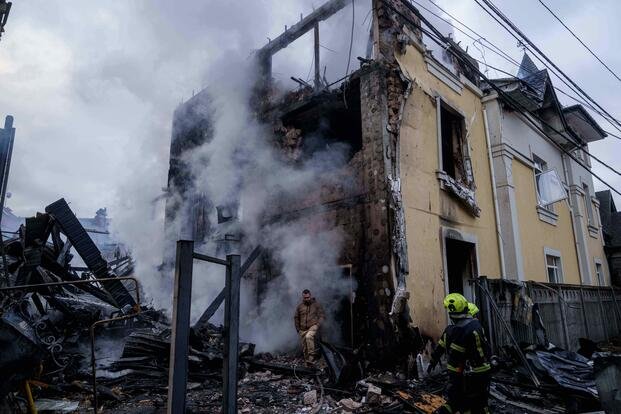
Hundreds of missiles and drones hit Kyiv and surrounding regions ahead of the Trump-Zelensky meeting. Ukrainian officials said the strikes targeted power stations, heating plants and residential neighborhoods as temperatures dropped below freezing. Emergency crews restored electricity to more than 1 million households, though rolling blackouts continued and hospitals operated on backup power in parts of the capital.
One of the most recent barrages fired waves of drones and missiles that killed civilians, cut power to multiple regions, and forced grid operators to scramble through the night to stabilize electricity supplies. Attacks have underscored how Moscow has leaned on air attacks to pressure Ukraine’s infrastructure through the winter.
Russian forces struck Kyiv with what Ukrainian authorities called a record winter barrage, blasting power stations and residential blocks and forcing civilians into shelters as subzero temperatures hit the region.
Ukraine’s largest energy company restored electricity to more than 1 million customers, though outages persisted. Officials described the strikes as an attempt to freeze out resistance and pressure negotiators. Another overnight assault killed and wounded civilians in Kyiv.
Monitoring Global Instability
A spokesperson for U.S. Southern Command (SOUTHCOM), asked whether the Florida talks could alter regional posture or trigger wider instability, said the command is monitoring for ripple effects.
“U.S. Southern Command closely monitors global events for potential implications to regional security within our area of responsibility. We do not comment on specific incidents outside our region. We remain focused on our mission to ensure stability and cooperation with partners,” the spokesperson told Military.com.
"The war must end to stop the immense loss and suffering it has already inflicted on millions of people."
An Organization for Security and Co-operation in Europe (OSCE) spokesperson also emphasized the broader stakes.
“Most importantly, the war must end to stop the immense loss and suffering it has already inflicted on millions of people,” the spokesperson told Military.com, adding that OSCE could serve as an impartial monitor if a ceasefire framework emerges.
Military.com reached out for comment to the White House, National Security Council, State Department, Pentagon, NATO, Ukrainian defense ministries, the Russian Embassy in Washington, and multiple European embassies.
Putin said Moscow would continue military operations if Ukraine rejects territorial concessions. Ukrainian officials insist no peace deal can legitimize Russia’s claims to annexed regions or leave communities without security guarantees.
The standoff over land, sovereignty, and who controls the Zaporizhzhia nuclear plant have been described by experts as the clearest obstacles to an agreement. European allies have started locking in long-term funding and security assistance designed to anchor any eventual settlement, even as Russia escalates strikes and tests how much support Kyiv can count on from Western capitals.


")





