


The paperwork is finished. The decision is not.
A Staten Island soldier’s Medal of Honor case has reached the president’s desk more than a decade after his death in Afghanistan, placing the final call in the hands of President Donald Trump.
Staff Sgt. Michael H. Ollis, a Staten Island native assigned to the 10th Mountain Division, was killed Aug. 28, 2013, at Forward Operating Base Ghazni in Afghanistan after shielding a Polish officer from a suicide bomber. He was awarded the Distinguished Service Cross—the Army’s second-highest valor honor.
But his family, lawmakers and veterans have spent years pushing for an upgrade to the Medal of Honor. In December 2025, the Army completed its review and formally sent the recommendation to the White House, leaving the final decision solely with the president.
“We’re cautiously optimistic,” mother Linda Ollis told Military.com. “We understand how far this has come, and we just pray it is finally signed.”
Military.com reached out for comment to the White House, the Department of Defense and U.S. Army.
A Long Wait
The case has moved through Army awards boards, senior command channels and congressional offices across multiple administrations as part of a process supporters say reflects caution in revisiting valor decisions rather than doubt about what Ollis did that day.

Early recognition focused on a posthumous Silver Star recommendation tied to the Aug. 28, 2013, attack at FOB Ghazni, where he was killed defending coalition forces during the suicide bombing.
Later reporting described his actions as a split-second decision to shield a Polish Army officer, a moment that became central to the case as advocates sought higher recognition for what they argue was conspicuous gallantry above and beyond the call of duty.
New York lawmakers, including U.S. Sen. Charles Schumer (D-N.Y.) and U.S. Rep. Nicole Malliotakis (R-N.Y.), urged Army leadership to support the upgrade, citing eyewitness accounts, battlefield documentation and allied testimony.
Schumer called the act “the definition of selfless bravery” during a Staten Island remembrance ceremony in May 2024. Malliotakis said at a district news conference in December 2025 that Ollis “gave his life so others could live.”
Advocates point to broader frustration with how rarely the military revisits valor awards once they are finalized, even when new accounts or pressure campaigns emerge.
In December 2025, the Army formally endorsed the upgrade recommendation, clearing the final internal hurdle.
'It's About Michael's Story'
The moment feels both hopeful and heavy, a combination the family says has followed nearly every milestone since their son was killed in Afghanistan.
“This has never been about ceremony,” Linda Ollis said. “It’s about making sure Michael’s story is told the right way.”
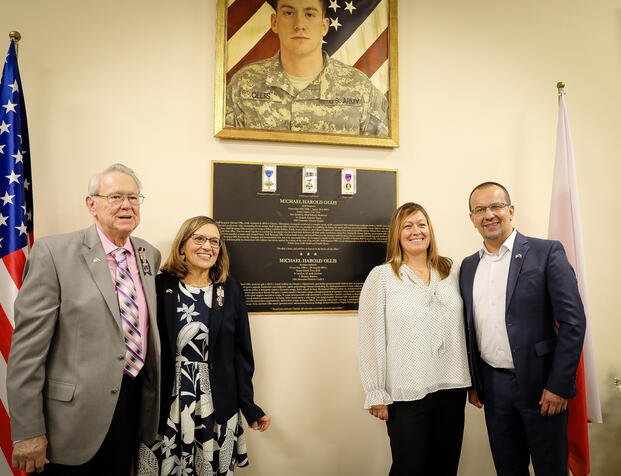
They spoke with pride about Michael’s legacy, gratitude for the Staten Island community that never stopped remembering him and the exhaustion of watching the case move through years of reviews, leadership changes and unanswered timelines.
We wanted people to really understand what Michael did that day. He didn’t just save one life. He saved many. - Linda Ollis
Robert Ollis, the father, said the family initially struggled to grasp the full scope of what had happened.
“They kept telling us he was a hero,” he said. “At first, we thought they must say that to every family. Then they explained what Michael actually did.”
The parents said recognition would not change the choice their son made in those final moments, but it would shape how the nation remembers.
“The wait was never about a ceremony,” Robert said. “It was about honor.”
The Case for the Medal
The effort to upgrade Ollis’ award began within months of his death, after his parents reviewed after-action reports and spoke with service members who witnessed the attack.
Ollis was credited with pushing a Polish officer out of the path of a suicide bomber moments before the explosion. Witness statements later showed his movement also shielded additional soldiers positioned nearby, limiting casualties in an area crowded with coalition forces.
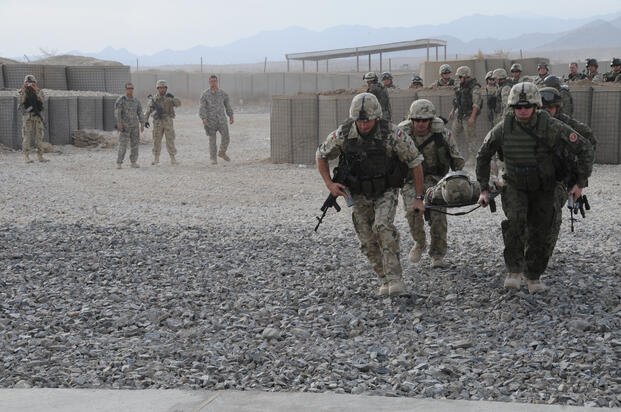
Supporters say the delay never reflected doubt about his valor, only the caution of a system that rarely reopens closed awards decisions.
After multiple reviews, board findings and command endorsements, the Army completed its review in December 2025 and forwarded the recommendation to the White House.
Now the President Decides
Only the president can approve a Medal of Honor.
Authority rests with the White House after military reviews are complete and the secretary of the Army signs off on the recommendation. No deadline exists. No public explanation is required. The decision can come quickly or remain unresolved.
Uncertainty has become the final stage of a journey that began more than a decade ago.
“We don’t know when,” Linda said. “We don’t know how it will happen. We just know it’s there now.”


")




")


