


The Pentagon’s sudden push to reshape the longtime military publication Stars and Stripes has ignited a high-stakes fight over whether the military’s historic newspaper can remain independent while operating inside the Department of Defense.
The Defense Department announced Thursday that it wants the publication to shift editorial emphasis toward warfighters—a change newsroom leaders and press freedom advocates said threatens the paper’s congressionally protected editorial independence. The move affects a newspaper that has reported on U.S. forces worldwide since World War II and remains a primary news source for service members stationed overseas.
Military.com reached out for comment to the Pentagon, the Defense Media Activity, the Committee to Protect Journalists, the Reporters Committee for Freedom of the Press and the Society of Professional Journalists.
Newsroom Caught Off Guard
The announcement did not arrive through internal channels.
Newsroom leaders said they first learned about the shift through social media and outside reporting.
“The Pentagon’s social media post yesterday and the Daily Wire story that accompanied it came as a surprise,” editor in chief Erik Slavin told Military.com on Friday afternoon. “We are seeking further details on the Pentagon’s intentions. We continue to provide accurate and balanced journalism tailored to the military community, and particularly those serving overseas.”

Slavin said independence defines the publication.
“The people who swear to defend the Constitution have earned the right to enjoy its benefits, including access to a free and independent press,” he said. “Public relations cannot replicate that.”
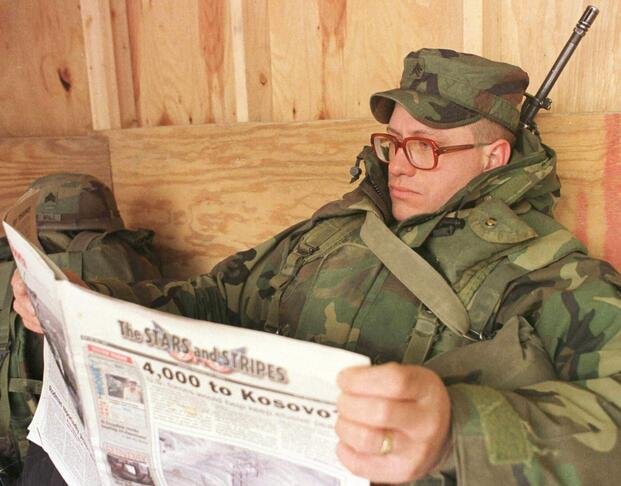
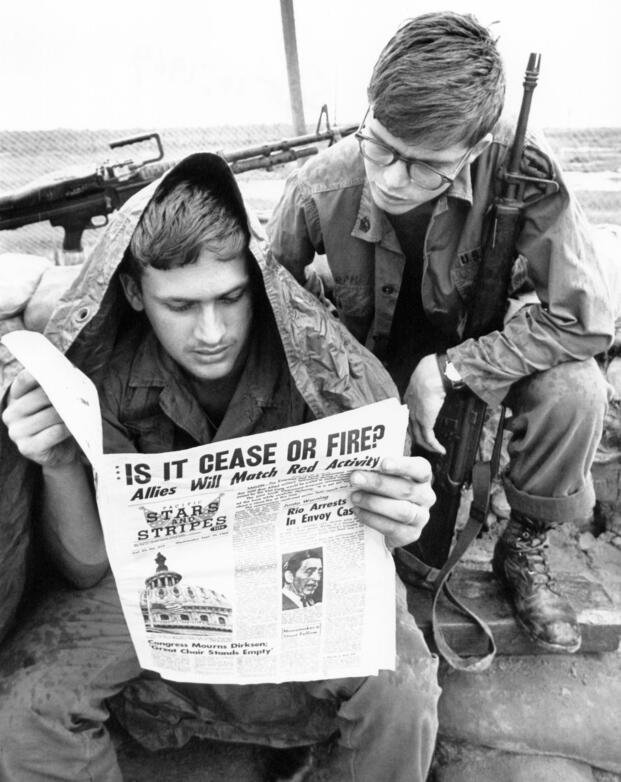
Stars and Stripes has reported continuously from U.S. military bases in Europe, the Middle East and Asia since World War II. Its coverage spans combat deployments, morale, housing shortages and family life on overseas installations.
“No other news organization reports daily from bases in Europe, the Middle East and Asia as we have done continuously since World War II,” Slavin said. “We do as objectively as humanly possible. While that means including command perspectives, we also hold military officials to account when called for. That gives service members a voice they would not otherwise have.”
Ombudsman Warns of 'Shattered' Trust
Warnings about the future of Stars and Stripes are now coming from the office designed to protect reader trust.
“The potential impact of the changes would be devastating for Stars and Stripes' editorial independence and for its credibility,” the publication's ombudsman, Jacqueline Smith, told Military.com on Friday. “Readers, who are primarily the military community, must be able to trust that what they are reading is fair, objective and balanced.
"If half of the material would be dictated by the Defense Department’s public relations arm, then that trust would be shattered.”

Smith said the debate is not about whether to focus on warfighters; it is about who controls that focus.
“The Pentagon’s desire to focus on the warfighters is not contradictory with Stripes’ mission,” she said. “The news organization must pursue that focus independent of any editorial control while also covering aspects that matter to service members, such as their family.”
“For a military audience, credibility is everything. If that is lost, the mission of Stars and Stripes is lost with it," she added.
Pentagon Veers From 'Woke Distractions'
The Pentagon did not answer Military.com’s questions about editorial safeguards, governance authority or whether any formal policies had changed.
Officials instead referred Military.com to a statement posted on X by Pentagon spokesperson Sean Parnell, which framed their intended shift as a return to serving warfighters. The Pentagon described the move as part of an effort to eliminate “woke distractions” while emphasizing coverage of fitness, lethality and survivability.
The statement did not explain how editorial independence would be preserved or what policies now govern newsroom authority.

Administrative oversight of Stars and Stripes rests with the Defense Media Activity, which provides budgetary and operational support while maintaining legal separation from editorial control.
DMA declined to comment on how the Pentagon’s refocus would be implemented or whether any safeguards would change. Public affairs chief Jo Bordeau told Military.com that questions should be directed back to the Department of Defense.
The response left unanswered how DMA plans to protect the publication’s congressionally protected editorial independence.
Legal and Press Freedom Alarm
Press freedom advocates say the implications extend far beyond one newsroom.
“Servicemembers and the public benefit from editorially independent reporting on the military,” Gabe Rottman, vice president of policy at the Reporters Committee for Freedom of the Press, told Military.com. “It is essential that lawmakers preserve the congressionally mandated editorial firewall.”
Advocates point to recent Pentagon actions that tightened access for credentialed journalists, including policies that required reporters to accept limits on unapproved newsgathering. Several major news organizations relinquished their Pentagon credentials rather than accept the restrictions.
The dispute has already moved into federal court, where a major news organization filed suit arguing that the Pentagon’s press rules violate constitutional protections for journalists and grant officials excessive power over who may report on the Defense Department.
Rottman said the consequences are institutional.
“If that line erodes,” he said, “the publication risks becoming a communications arm rather than a news organization.”
The Stakes for the Military Press
Stars and Stripes occupies a rare place in American journalism: It is government-funded but protected from government editorial control, so service members can receive independent reporting about the institution in which they serve. That firewall allows reporters to work inside the military while answering to readers rather than commanders.
Press advocates warn that once editorial priorities begin reflecting Pentagon communications goals, that balance collapses. Loss of credibility, they argue, does not only damage a newsroom but weakens the information environment inside the ranks where reporting affects morale, decision making, and confidence in leadership.
For now, newsroom leaders say the mission remains unchanged.
“We continue to provide accurate and balanced journalism tailored to the military community,” Slavin told Military.com.





