


Gen. Vo Nguyen Giap earned his reputation as one of history's great military commanders on May 7, 1954, when 16,000 French soldiers surrendered to him at Dien Bien Phu after a 57-day siege. The victory ended French colonial rule in Indochina and made Giap a hero across the communist world.
Fourteen years later, Giap saw his chance to repeat history. In January 1968, he deployed the same veteran divisions that humbled France against 6,000 U.S. Marines isolated at Khe Sanh Combat Base near the Laotian border. He used nearly identical tactics in the hopes of destroying the Marines and forcing the withdrawal of American troops from Vietnam.
This time, Giap lost. His tactics destroyed France but failed against American technology at Khe Sanh, revealing how airpower and helicopters had transformed modern warfare.

The Siege of Dien Bien Phu
Giap commanded Viet Minh forces fighting Japan's occupation during World War II, working briefly with American OSS commandos who trained his guerrillas in 1945. After the war, he became Ho Chi Minh's most trusted general, leading his forces against France's attempt to reclaim its Indochina colony.
By 1953, France spent eight percent of its national budget on an increasingly unpopular war. The country had spent nearly double what the U.S. had provided in the Marshall Plan, leaving many citizens back home angered as they struggled to recover from WWII.
Gen. Henri Navarre desperately needed a decisive victory against the Viet Minh. He chose Dien Bien Phu as a new base to block Viet Minh supply routes into Laos and force Giap into conventional battle where French firepower and airpower could dominate.
He ordered General Christian de Castries and his men to occupy the valley and prepare for battle. Castries' ranks were filled mainly by French Colonial troops from Algeria, locally recruited Vietnamese auxiliaries, and even Foreign Legion soldiers, some of whom were former German SS members.
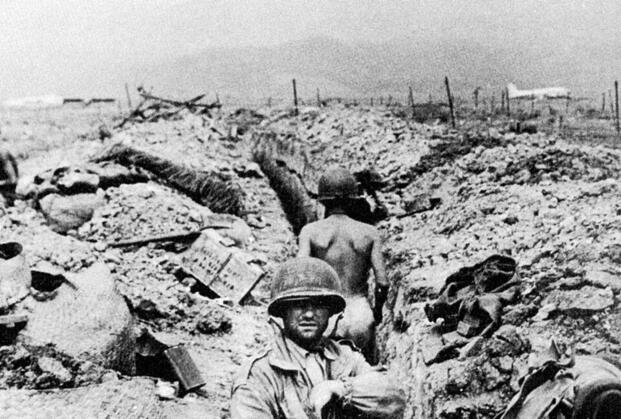
In November 1953, French forces had established a fortified base with 16,000 troops spread across strongpoints in a 40-mile defensive perimeter. The valley sat 120 miles from the nearest French supply base. Navarre bet his entire force that airpower alone could sustain them and defeat Giap.
French intelligence made several fatal miscalculations. Officers assured Navarre the Viet Minh possessed no heavy artillery. Even if they did, French commanders believed the surrounding mountains made it impossible to position guns overlooking the valley. They dismissed warnings that stretched supply lines and insufficient troops left the garrison vulnerable.
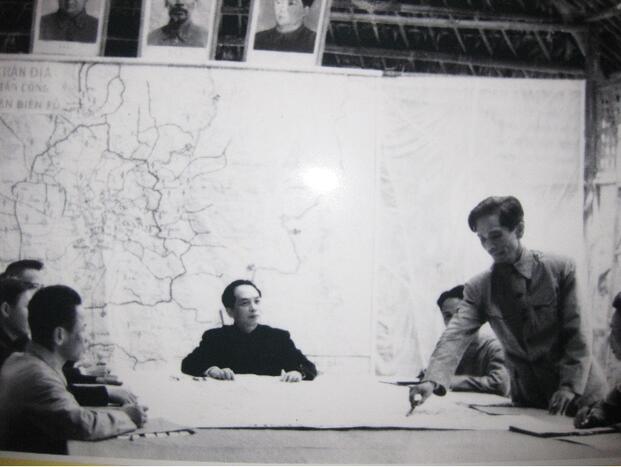
How Giap Defeated the French
Giap mobilized 60,000 troops in the mountains around Dien Bien Phu. His forces manually hauled disassembled artillery pieces, including Soviet-supplied 105mm guns and Chinese 75mm pack howitzers, up steep jungle slopes. Thousands of locals carried ammunition and supplies on bicycles along hidden trails.
Soldiers dug elaborate trench networks that allowed them to advance on French positions while being protected from defensive fire.
When Viet Minh artillery opened fire on March 13, 1954, French commanders were stunned. The first barrage disabled the airstrip, immediately crippling their plans for aerial resupply. Giap's gunners on the high ground methodically destroyed French artillery positions trapped in the valley below.
Over the course of the battle, the French were forced to airdrop supplies and even reinforcements from high altitude. Giap’s anti-aircraft guns turned the skies deadly for French transport planes.
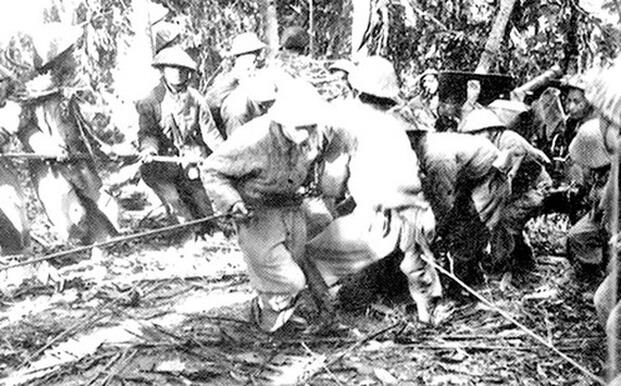
The siege lasted 57 days. Giap launched mass infantry assaults despite horrific casualties. Viet Minh soldiers advanced through their own artillery fire to overrun French defensive positions.
French forces retained the central base area, but Giap's troops captured outlying strongpoints one by one.
By April 22, Giap controlled 90 percent of the airstrip. But French soldiers had run out of ammunition, food and medical supplies.
On May 7, more than 2,200 French troops lay dead and the rest were forced to surrender. The defeat destroyed any French political will to continue the war. France abandoned Indochina at the Geneva Conference three months later.
Giap had proven guerrilla forces could defeat Western military power in conventional battle. His formula to isolate the enemy, cut supply lines, position artillery on high ground, and accept massive casualties to achieve victory had worked.
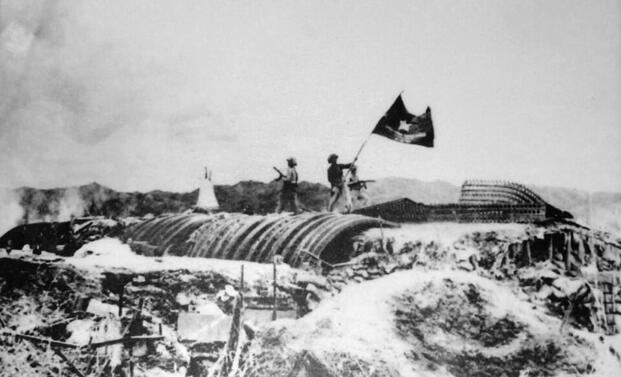
The Siege of Khe Sanh
By 1968, North Vietnamese forces under Giap were now facing American troops. Though the Americans were better armed, trained and pursued different tactics than the French, Giap thought he knew how to beat them.
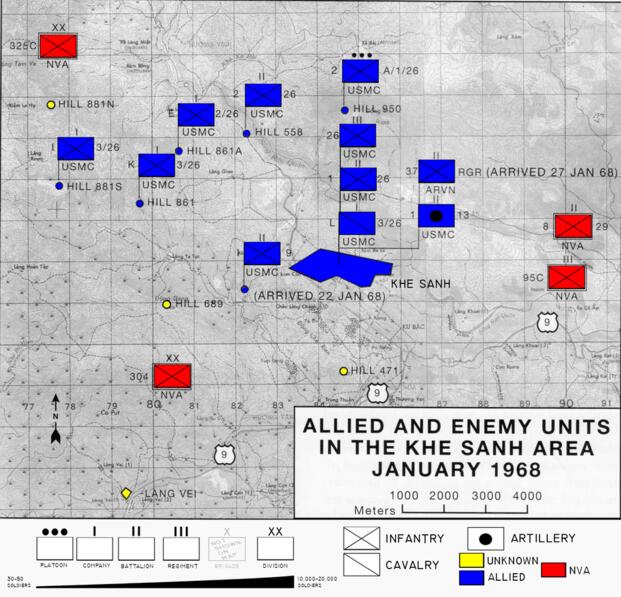
As the Tet Offensive kicked off, Giap sent two full divisions to Khe Sanh in January 1968, the 304th and 325th, both veterans of Dien Bien Phu. These battle-hardened units had helped deliver France's greatest defeat. Giap believed their experience in siege warfare would guarantee another victory.
He positioned approximately 20,000 troops in the mountains surrounding the Marine base. His plan mirrored Dien Bien Phu, isolate the Americans, cut off resupply, and overwhelm them.
On Jan. 20, a Marine patrol from India Company on Hill 881 South stumbled into an NVA regimental staging area. The next morning, approximately 300 North Vietnamese troops assaulted Hill 861 at 12:30 a.m.
The Marines were prepared after an NVA defector revealed Giap’s attack plans. Despite penetrating the defensive perimeter in brutal close-quarters combat, NVA forces were driven back from the hills.
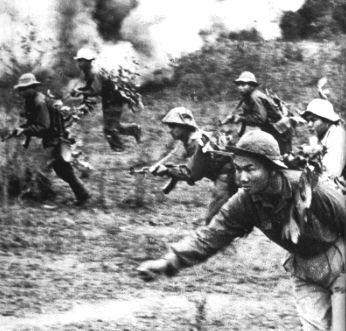
Hours later, NVA artillery and rockets slammed into the main base. One rocket scored a direct hit on the ammunition dump, destroying 1,500 tons of explosives. The blast threw mortar rounds and artillery shells into the air that detonated across the base.
Another shell hit a cache of tear gas that saturated the entire area. Fourteen Marines died and 43 were wounded in the opening bombardment. NVA forces charged the base as the Marines moved to counter them.
Journalists immediately compared Khe Sanh to Dien Bien Phu. President Lyndon Johnson feared a repeat of France's humiliation. He reportedly kept a sand table model of Khe Sanh in the White House situation room and obsessively tracked the siege's progress.
Giap expected the battle to deliver a crushing psychological blow that would break the American will to continue the war. With NVA and VC forces besieging nearly every major base in the South, it seemed that Giap would defeat another foreign military.
American Technology Changes the Battlefield
But Giap miscalculated several critical factors. The Marines had studied the French defeat at Dien Bien Phu. Unlike the French who occupied a valley floor, Marines deliberately held the high ground on Hills 861, 861A and 881 South.
Marine commanders positioned 16 Army 175mm guns that could reach North Vietnamese artillery positions. The base sat only 28 miles from major American supply bases compared to Dien Bien Phu's total isolation.
Most critically, Giap underestimated American airpower. The U.S. military in 1968 possessed technology France lacked in 1954. Helicopters delivered supplies and evacuated wounded troops in droves despite enemy ground fire.
C-130 and C-123 transports used low-altitude parachute extraction systems to drop supplies when landing on the airstrip became too dangerous. AC-47 "Spooky" gunships dominated the night sky and decimated NVA troops.
The Air Force launched Operation Niagara, coordinating 24,000 tactical fighter-bomber sorties and 2,700 B-52 strategic bomber runs. American aircraft dropped more than 75,000 tons of bombs on Giap's divisions during the 77-day siege.
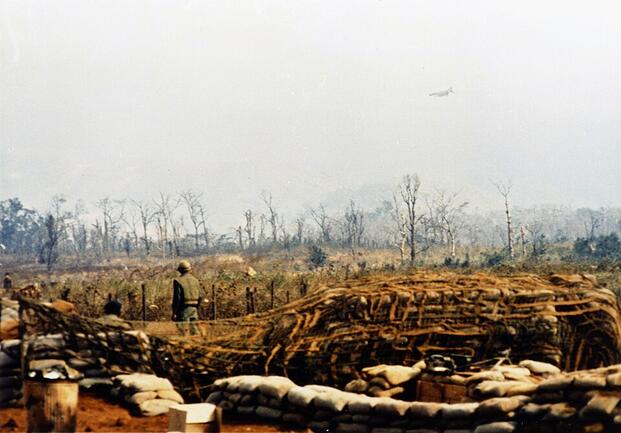
Sensors planted along infiltration routes detected NVA troop movements, allowing precision strikes on supply columns and staging areas.
When North Vietnamese forces moved within one mile of the base, believing B-52s were prohibited from bombing that close, American commanders reduced the safety restriction to half a mile. A single B-52 strike allegedly destroyed two NVA battalions preparing to assault the base.
Giap's artillery positions became death traps as American planes targeted them relentlessly. His supply lines suffered constant air attack along the Ho Chi Minh Trail.
The massive casualties his divisions absorbed at Dien Bien Phu had earned victory against France. At Khe Sanh, they accomplished nothing against overwhelming American firepower. In fact, American firepower had flipped Giap’s strategy on its head.
After 77 days of a siege, Operation Pegasus was launched to secure the main ground supply route to the base. Marine patrols from Khe Sanh and cavalrymen loaded in helicopters from the 1st Air Cavalry Division pushed from opposite sides of Route 9, wiping out NVA units along the way. When the Army and Marine units met, the siege of Khe Sanh was officially lifted. Giap had failed.
The Marines were victorious. U.S. casualties totaled approximately 500 killed. North Vietnamese losses were significantly higher with estimates ranging from 5,000 to more than 10,000 dead, though exact numbers remain disputed.
Why Giap's Strategy Failed at Khe Sanh
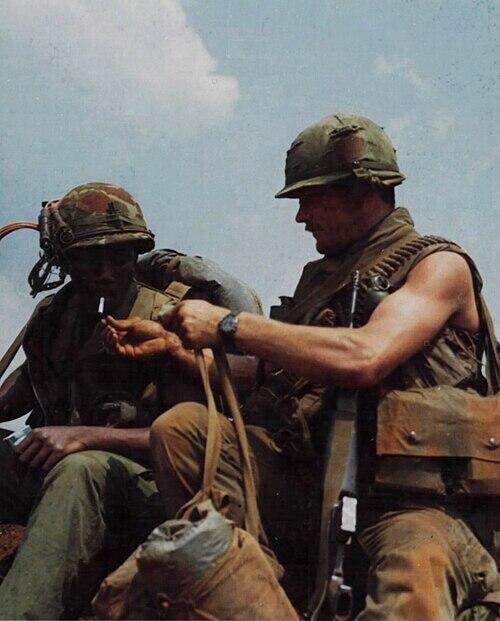
Technology made the decisive difference at Khe Sanh. Giap's proven tactics that destroyed France in a remote valley couldn't overcome American airpower and helicopter mobility.
The French had approximately 75 aircraft available for the entire Indochina theater in 1954. At Khe Sanh, American forces could call on thousands of aircraft from carriers and air bases throughout South Vietnam, Thailand and Guam.
The Marines had also studied Dien Bien Phu. Unlike the French who occupied a valley floor with enemy guns firing down on them, Marines immediately assaulted and held the high ground around the base with clear fields of fire. The Marines also had a constant source of supplies.
But Giap's failure at Khe Sanh was successful in one regard, it sapped the American public’s morale as they struggled to grasp how the NVA could besiege an entire base. While the siege captured international headlines, he achieved his strategic objective.
This battle and the overarching Tet Offensive diverted American attention and shattered public confidence in victory, even though it resulted in massive communist casualties.
While the Tet Offensive was a tactical failure, Giap explained the significance of continuing guerilla warfare going forward. He said, “accumulate a thousand small victories to turn into one great success.”
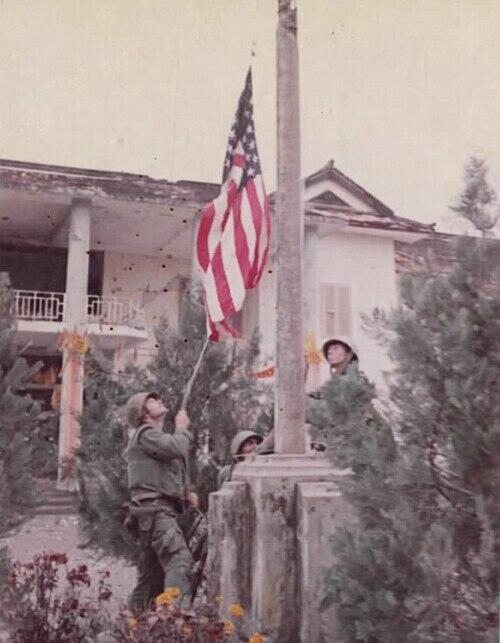
An NVA Commander's Continued Success
Giap had previously proven his tactical abilities against the Marines before Khe Sanh. On July 2, 1967, he orchestrated a devastating ambush near Con Thien that became the single deadliest day for the Marines in the entire Vietnam War. Two companies from 1st Battalion, 9th Marines walked into a perfectly executed trap set by the 90th Regiment, 324B Division.
North Vietnamese forces used flamethrowers to set fire to vegetation along Highway 561 and forced the Marines into open killing zones. Artillery, mortars and small arms fire cut them down. Giap is the reason 1/9 retains the highest casualty rate of any battalion in Marine Corps history.
The ambush demonstrated Giap's mastery of terrain, timing and combined arms tactics he had refined since Dien Bien Phu. His forces studied Marine patrol patterns, prepared elaborate ambush positions, and coordinated multiple weapons systems to devastating effect.
This success likely gave him the confidence to assault Khe Sanh, though the Marines there held every strategic advantage over Giap.
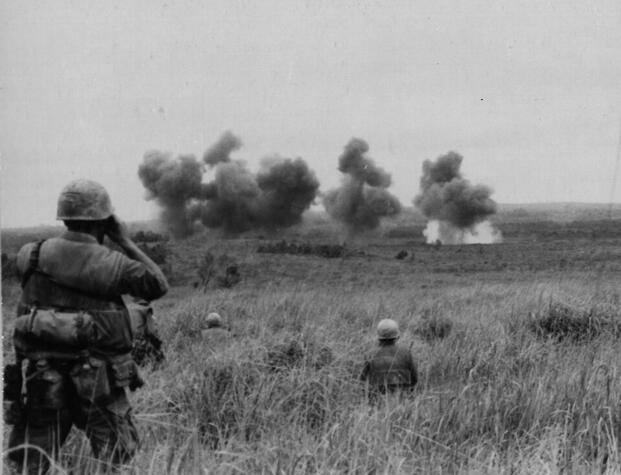
Commander of American forces in Vietnam, Gen. William Westmoreland, later criticized Giap’s willingness to sacrifice his men, stating “such a disregard for human life may make a formidable adversary, but it does not make a military genius.”
After Khe Sanh proved that his massed forces couldn't survive American bombing, Giap shifted back to guerrilla warfare and political strategy. He recognized that breaking American political will mattered more than winning set-piece battles.
When speaking to American journalist, Stanley Karnow in 1990, Giap explained himself, “We were not strong enough to drive out a half-million American troops, that wasn't our aim. Our intention was to break the will of the American government to continue the war. Westmoreland was wrong to expect that his superior firepower would grind us down.”
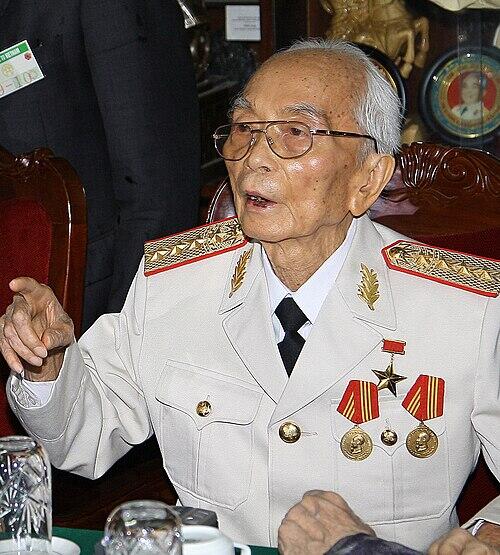
Giap commanded North Vietnamese forces for nearly four decades. He defeated two major Western powers, first driving France from Indochina, then forcing the American withdrawal from Vietnam. Political infighting after Ho Chi Minh’s death in 1969 removed Giap from command, so he missed out on the legacy of capturing Saigon.
However, he led Vietnamese forces against the Khmer Rouge and later ejected the Chinese out of the country, finally bringing peace to Vietnam after nearly four decades of war.
The general who once trained with American commandos and humbled France at Dien Bien Phu failed to crush the Marines at Khe Sanh. Nevertheless, Giap proved to be one of the most successful military commanders of the 20th century, only being left out of American and even Vietnamese history books because of political infighting and his role in facing U.S. forces.


")





