


For Sae Joon Park, it’s not political. The U.S. Army veteran simply wants Homeland Security Secretary Kristi Noem to acknowledge what’s happening to veterans in her own department.
Noem was called into Capitol Hill last Wednesday to testify to members of Congress concerning recent actions by Immigration and Customs Enforcement (ICE). The hearing took a surprisingly awkward turn when Rep. Seth Magaziner (D-Rhode Island) quizzed Noem on recent deportations involving veterans.
“Madam Secretary, how many U.S. military veterans have you deported?” Magaziner asked.
“Sir, we have not deported U.S. citizens or military veterans,” Noem said.
That’s when an assistant to Magaziner brought up an iPad with Park’s face on the screen. The veteran was on live video from his new home in South Korea. After living in Hawaii for more than two decades, Park decided to self-deport back to his native Korea in June, a place he hasn’t called home for nearly 50 years.

Wounded in Panama
Park, 55, received a Purple Heart for his service in Operation Just Cause in 1989 to overthrow Panamanian leader Manuel Noriega. He told NPR earlier this year that his platoon was ambushed one day while eating lunch. Panamanian soldiers opened fire, and Park, attempting to return fire, was shot in the back.
“I realized I was shot,” he told NPR. “So, I'm thinking, ‘Oh my God, I’m paralyzed.’ And then thinking, ‘Oh my God, I’m not just paralyzed. I’m dying right now.’”
Park was shot twice, but one of the bullets hit his dog tag, somewhat lessening the impact. After being transported back to the U.S., Park was honorably discharged. Like many other veterans, for Park, physical wounds healed, but mental scars remained.
“I was suffering from PTSD severely,” he said. “From sleeping nightmares to like, having just fearful thoughts all the time. Couldn’t watch horror movies, couldn’t hear loud noises.”
Park didn’t realize he was suffering from PTSD, and instead of receiving mental health treatment, he began abusing drugs to try to numb his pain. He was addicted to crack cocaine for most of his 20s and 30s. One night in New York, he was arrested while trying to purchase drugs. Park skipped a court hearing and, along with drug possession, he was charged with bail jumping.
While he eventually turned his life around and maintains he’s been drug-free for more than 15 years, Park’s criminal past made becoming a citizen harder. Typically, the U.S. allows expedited naturalization for veterans who served a year in the military. Park was discharged prior to completing 12 months, and the Panamanian invasion was not considered a “period of hostility.”
While Magaziner noted Park’s drug charges from a couple of decades ago, they weren’t violent crimes, the congressman argued, affecting only Park.
“I’m grateful for every single person who has served,” Noem responded. “But the immigration laws must be enforced.”
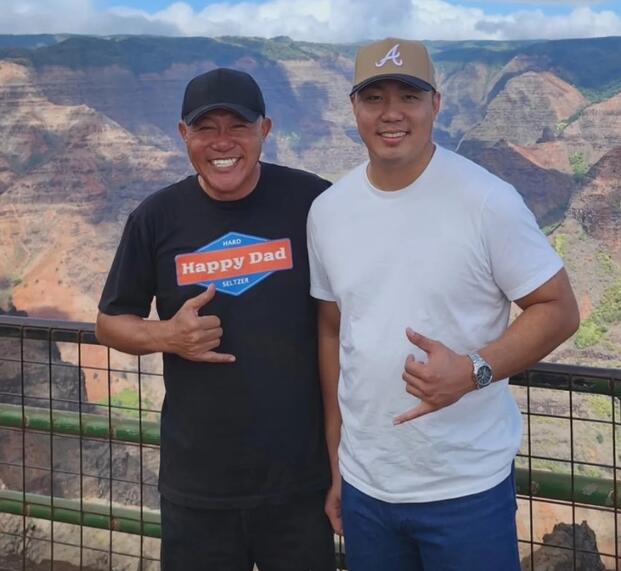
Trying to Adapt to Korea
Meanwhile, Park has spent the past few months trying to adapt to his foreign surroundings in South Korea. He hasn’t abandoned the thought of one day returning to the U.S.
“I’m doing well in Korea these past six months… but I still hope to return to the place I consider home,” Park told Island News.
Park tries to stay positive. His son and daughter lifted his spirits with a visit to South Korea recently, but it’s difficult calling this new land “home.”
“I have my moments… I go through my PTSD moments, but I try to make the most of every day.”
A Pathway Back?
Park has been working with attorneys for the past several months. They said all they want from the surprise video appearance at the hearing is for Americans to realize – including Noem – that veterans are being targeted for deportation, like Godfrey Wade, an Army veteran who has spent the past three months in a Georgia detention center, fearing he will soon be sent to his native Jamaica.
“I just hope she realizes what’s actually happening out there… and not answer things that aren’t true,” Park said.
Facing Noem in a public setting thrusts a spotlight onto what is really happening to some veterans, Park’s lawyer said.
While Magaziner and Noem’s exchange was tense, it could lead to action for Park.
“Will you commit to looking at Mr. Park’s case and see if you can help him find a pathway back?” Magaziner asked.
Saying immigration programs need to have integrity, Noem said, “I will absolutely look at his case.”
Park’s attorneys are examining his drug conviction in New York, hoping to get the crime reclassified as a misdemeanor, which might open the door to Park returning to the U.S.
“I’m grateful for my team and all the support I’ve been getting,” Park said. “I pray every day that the results will bring me back home.”





