


On Dec. 16 1944, German artillery opened fire on an inexperienced American division that had been at the front for less than a week. Within 72 hours, two entire regiments of the 106th Infantry Division ceased to exist. Approximately 7,000 American soldiers became prisoners of war in one of the largest mass surrenders in U.S. military history.
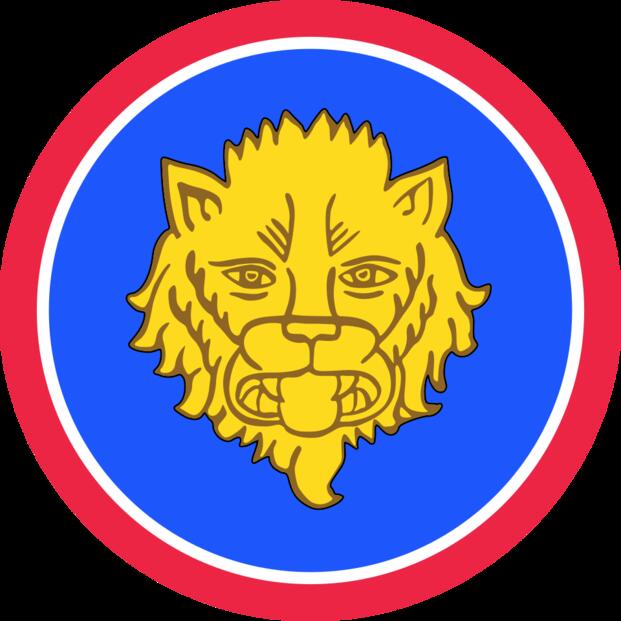
The Golden Lions suffered one of the worst disasters of any American division in World War II, leaving the division effectively destroyed. Their history remains overshadowed by Bastogne's dramatic siege where the 101st Airborne managed to survive against all odds. Yet German commanders later acknowledged what Allied histories often overlook. The 106th's sacrifice disrupted Hitler's timetable and helped save the Allied position in the Ardennes.

The 106th Enters the European Conflict
Maj. Gen. Alan W. Jones commanded the 106th Infantry Division from its activation in March 1943. The 50-year-old West Point graduate had never led troops in combat. Neither had most of the leaders under him. His men were completely inexperienced and averaged just 21 years old.
The division trained at Fort Jackson, South Carolina, but suddenly lost over 5,000 soldiers to replacement pools in 1944 as casualties mounted. Fresh troops filled the ranks, including former ASTP students and aviation cadets reassigned to the infantry. They soon adopted the motto "To Make History is Our Aim."
Jones oversaw the division's deployment to Europe in November 1944. By that time, it seemed like Hitler's forces were all but defeated. On Dec. 11, the 106th relieved the 2nd Infantry Division in the Schnee Eifel sector. Army doctrine at the time dictated that one division should defend no more than five miles of frontline. The 106th found itself guarding 21 miles of rough terrain.
"We were assigned to three different corps in as many separate locations" during the landing period, Jones later recalled. Maps were scarce. The division arrived in mud and freezing rain. Artillery battalions had no ammunition until the 2nd Division shared its stocks with the newly arrived troops.
The division's first combat casualty came shortly after the troops occupied the trenches. Private First Class John Koukol of Company B, 422nd Infantry Regiment, suffered a shrapnel wound in his leg while on sentry duty on Dec. 12, 1944—four days before the massive German offensive.
Among the other troops facing the German line in the region was Capt. Alan W. Jones Jr., the general's son, serving with the 423rd Infantry Regiment. The area was considered quiet, the men called it the Ghost Front. Like the French four years earlier, American commanders assumed German tanks were unable or unwilling to launch an attack through the area.
The Ardennes Offensive
Private Peter Iosso of Company E, 422nd Regiment, stood guard duty on the night of Dec. 15-16. "I had been out in the snow from about 6 p.m. on December 15 until about 6 a.m. the next morning," he recalled. "My equipment and clothing were still wet, freezing at night and thawing in the daytime."
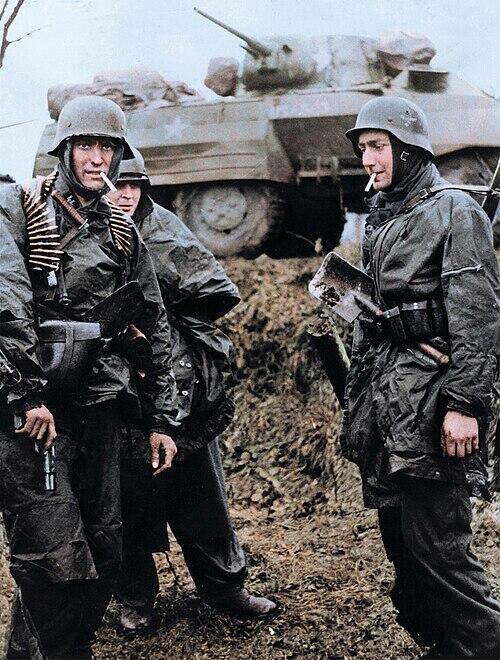
Under the cover of cloudy weather and forested terrain, Hitler managed to mass 30 divisions, including thousands of tanks and vehicles in the sector facing the 106th and 28th Infantry Divisions. Their mission was to pierce through the American lines, split the Allied Armies, capture Antwerp, and hopefully force the Western Allies to sue for peace.
At 5:30 a.m. the following morning, German artillery suddenly erupted across an 80-mile front. Iosso and the men of his regiment were shocked by the sudden attack. The intense bombardment lasted 90 minutes, causing mass casualties and confusion among the American troops. Three entire German armies with 290,000 men then charged the 80,000 Americans holding the line. Hitler had gambled everything on one final offensive to against the Allied forces.
General Hasso von Manteuffel's Fifth Panzer Army struck the positions held by the 106th. German infiltrators had cut telephone lines. Radio jamming disrupted wireless communications. Jones found himself commanding blind.
The 18th Volksgrenadier Division executed a double envelopment around the Schnee Eifel. By nightfall on Dec. 17, the 422nd and 423rd Regiments were completely trapped behind German lines with approximately 7,000 men. Many of them were initially unaware of their predicament and attempted to fight back.
"We all saw that white flag and we thought they were surrendering to us," recalled Corporal Stanley Wojtusik of the 422nd. "Unfortunately that wasn't the case." The Germans approached under a flag of truce on Dec. 19 and urged the regiments to give up.
The trapped Americans initially refused. Despite their dire situation and the lack of supplies, the men fought against numerous German attacks while trying to find an opening to the west.
The Division Falls Apart
Meanwhile, Jones tried to organize a hasty defense with what few forces he had left at his disposal. He finally ordered the trapped regiments to attack west toward Schonberg on Dec. 19. Without armor, with dwindling artillery ammunition and no resupply of food or water for four days, they still fought like hell and tried to break out of the encirclement. However, German antiaircraft units and panzers had blocked their escape.
The general watched his division slowly disintegrate before his eyes, a fact made worse by the realization that his son was one of the many thousands with no hope of rescue. At one point, Jones somberly observed that he had set a record for "losing a division quicker than any commander in the US Army."
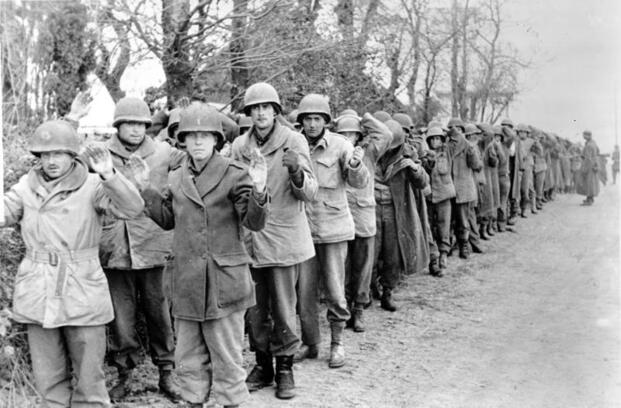
By the afternoon of the 19th, Colonel George L. Descheneaux Jr. of the 422nd and Colonel Charles C. Cavender of the 423rd were forced to order their men to surrender. Descheneaux later explained they lacked ammunition, food and water. Casualties were so severe that they filled aid stations and had no ability to evacuate any wounded.
Only nine officers and approximately 70 enlisted men from the two regiments managed to evade German patrols and reach American lines. Captain Jones Jr. became a prisoner of war, along with nearly 7,000 of his comrades. His father would not learn his son's fate for weeks. Iosso and Wojtusik were also captured.
Maj. Gen. Matthew Ridgway, Jones's superior as XVIII Airborne Corps commander, grew frustrated with the situation. The legendary airborne general wanted Jones relieved of command. On Dec. 22 or 23, Jones suffered what was reported as a heart attack. Whether the heart attack was genuine or a cover for command failure remains debated by historians. Brigadier General Herbert T. Perrin assumed command of the few surviving men of the 106th.
Despite the disaster, Ridgway allowed Jones to continue serving as his deputy commander. He was later wounded by German artillery in March 1945.

The Golden Lions That Held Their Ground
While two entire regiments surrendered, the 424th Infantry Regiment under Colonel Alexander D. Reid fell back to St. Vith. The town controlled five highways and three rail lines. Like Bastogne, St. Vith was one of the primary targets of the German offensive. Manteuffel needed it captured by 6 p.m. on Dec. 17 to maintain his offensive timetable.
Lt. Col. Thomas Riggs, the 28-year-old commander of the 81st Engineer Combat Battalion, organized the initial defense. His few hundred green engineers faced thousands of veteran German troops. One of the few positive outcomes of the other regiments being surrounded, was the fact that it gave the survivors time to organize the defenses in the city.
The delay caused by the encircled troops also allowed elements of the 7th Armored Division, 9th Armored Division and 112th Infantry Regiment to reach the city on Dec. 18. By the time the bulk of the German forces reached St. Vith, it was defended by a substantial number of American forces.
Brigadier General Bruce C. Clarke of the 7th Armored Division arrived and assumed command from Jones. As he transferred defense of the city to Clarke, Jones told him "I've thrown in my last chips."
The Americans held St. Vith for five critical days. Tank destroyers and concealed armor stopped multiple German assaults. Fierce infantry firefights drove back the Germans repeatedly. The defense was so effective that Manteuffel later wrote to a 106th artillery officer in 1970 that the division "held up an entire Corps for five days, forcing many of his troops to go north."
In 1964, Manteuffel personally told Clarke that his defensive tactics made him believe "he faced a corps instead of a thin force of units." The German general later confirmed, "A whole Army Corps was delayed by your defense around St. Vith."
However, the Americans were running low on supplies and were in danger of being overrun or surrounded. German forces finally captured St. Vith on the night of Dec. 21.
American troops finally withdrew west across the Salm River on Dec. 23. The six-day delay in taking the city crippled Manteuffel's original timeline for the offensive. The delay proved so severe that on Christmas Eve, Manteuffel recommended to Hitler's adjutant that Germany abandon the offensive altogether.
A few other remnants of the 106th also refused to surrender. About 100 men of the 589th Field Artillery Battalion fought through Schonberg and reached the strategic crossroads at Baraque de Fraiture on Dec. 19. Major Arthur C. Parker III positioned three 105mm howitzers and scraped together fewer than 300 men from various units which delayed Manteuffel's assault.
For four days, this mixed force held against the 2nd SS Panzer Division in what became known as the "Alamo Defense." Parker was wounded on the third day but refused evacuation until he lost consciousness. The Germans overwhelmed the position on Dec. 23. Almost half of the defenders became casualties.
Horst Gresiak, a German battalion commander who fought at Parker's Crossroads, later told American interrogators that the battle there was "the most violent and toughest battle” he witnessed throughout the war.

The Price Paid by the 106th
The 106th suffered 8,663 casualties during the Battle of the Bulge. Approximately 7,000 of which became prisoners of war. The Germans gained more captives in one action against the 106th than any other American division lost throughout the entire war.
The journey to captivity was brutal. The POWs were packed into boxcars, 60 to 80 men per car, with a single bucket for a toilet. Allied planes inadvertently strafed and bombed the unmarked trains numerous times. On Dec. 23, RAF bombers hit rail yards at Limburg where hundreds of 106th POWs sat in boxcars, killing approximately 35 men. Some prisoners were crushed to death in the cramped cars during the four to five day journey to Stalag IX-B.
The camp, perched on a hill 30 miles east of Frankfurt, ranked as one of the worst ones in Germany. Prisoners lived on two bowls of thin soup and two slices of bread daily. The lice-ridden barracks held 500 men each with inadequate heat and no bathroom facilities. Prisoners lost an average of 30 pounds.
In late January 1945, camp administrators ordered 350 POWs to be selected for a labor detail. They targeted approximately 80 Jewish-American prisoners plus 270 others with Jewish-sounding names or labeled troublemakers.
Master Sergeant Roddie Edmonds of the 106th, refused German demands to identify any Jews among the group. When the German commander put a gun to his head, Edmonds stood at attention and declared "We are all Jews here." When he reminded the German that he would be tried for war crimes soon, the commander backed down.
Israel's Yad Vashem Holocaust memorial recognized Edmonds in 2015 as the first American serviceman honored as Righteous Among the Nations.
The 350 men ultimately selected were sent to Berga, a subcamp of Buchenwald Concentration Camp not registered with the International Red Cross. Forced to dig tunnels for an underground ammunition factory, the prisoners were systematically starved and denied medical care.
Another 106th soldier, Private First Class James Stuart Hamilton, would die of malnutrition on his 22nd birthday, April 4, 1945. Morton Goldstein of the 590th Field Artillery was executed at the concentration camp for a minor infraction. The men suffered terribly.
On April 3, the Germans forced the survivors on a death march. Seventy-three Americans died during the march—the highest number of Americans who perished in any such march in the European theater.
Iosso was one of the men that survived the brutal ordeal, later noting "On the road we started losing more men, up to six a night. We would go to sleep and six men would not wake up."
Of the 350 sent to Berga, only 140 to 160 survived. At least 180 106th Division prisoners died in German captivity throughout the war, many of them in Berga or on the death march.
Liberation for most of the men came on Easter Sunday, March 30, 1945, when the 6th Armored Division reached Stalag IX-B and breached the front gate. As ex-POWs began their sunrise worship service, an Army chaplain arrived with communion wafers.
Many of the men noted this was the moment they realized they were truly liberated. Capt. Jones and Cpl. Wojtusik were a just a couple of the thousands of men liberated after months of captivity and mistreatment.
Iosso and the few other Berga survivors were finally liberated by the 11th Armored Division on April 23. He weighed only 90 pounds at the time.
Private Kurt Vonnegut of the 422nd survived captivity and even witnessed the Dresden firebombing. He later wrote "Slaughterhouse-Five" based on his experiences.
Private First Class Donald Prell, who survived Allied bombings while trapped in a boxcar with 59 other POWs, later founded Datamation, the first computer magazine.
A Fighting Return
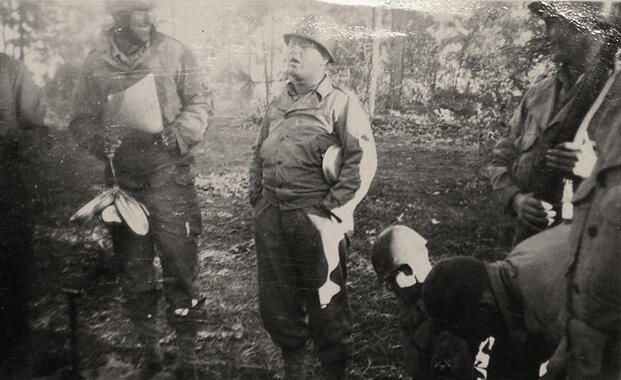
The 106th was effectively destroyed, but it served through the rest of the war. Jones himself insisted in 1947 that "during the first 48 hours, the 106th Infantry Division, alone and unaided, solely by its refusal to give ground and open the way to the West, decided the fate of Hitler's last bid for Europe."
The surviving 424th Regiment went on to fight alongside the 82nd Airborne Division. In January 1945, the reconstituted 106th returned to combat with fresh replacements and new regiments. The division fought through the remainder of the Ardennes counteroffensive, then advanced into the Siegfried Line in March.
The lost 422nd and 423rd Infantry Regiments were reconstituted in France on April 10, 1945, filled with replacement troops and expected to move out soon. They were attached to the 66th Infantry Division in training status. Both regiments were still in training when Germany surrendered on May 8, 1945. They never saw combat again.
After V-E Day, the Army assigned the 106th to guard German POW enclosures. No division had more right to that duty. The Golden Lions guarded thousands of prisoners through the summer of 1945.

The Forgotten Legacy
The division was never officially added to the post-war troop list. When it was reorganized in Puerto Rico in 1948, the War Department determined the 106th was not needed. The division headquarters was inactivated in 1950, bringing the short history of the 106th to an end.
Popular accounts of the Battle of the Bulge focus on Bastogne and the 101st Airborne's defiant stand. The 106th's story became one of failure that many in the Army were eager to forget. In fact, the official U.S. Army history acknowledged the Schnee Eifel battle "represents the most serious reverse suffered by American arms during the operations of 1944–45 in the European theater."
No other American division was overrun and forced to surrender entire regiments in World War II. The 106th stands alone in the scale of its loss from a single engagement.
Historian John S.D. Eisenhower, son of Gen. Dwight D. Eisenhower, later noted that while Bastogne garnered attention, other actions proved equally decisive. The stand at Elsenborn Ridge. The defense of St. Vith. These battles bought time that allowed Patton's Army and fresh reinforcements to reach the Ardennes in time to save the Allies.
The 106th Infantry Division held up Manteuffel for four days before losing two entire regiments. The remnants of the division managed to hold St. Vith for several more days. By the time the survivors fled west, Manteuffel already knew his offensive had failed.
The division earned 325 Bronze Stars, 64 Silver Stars and one Distinguished Service Cross during its brief combat service. Sixty-one soldiers remain listed as missing in action.

Some veterans, including Wojtusik later formed the 106th Infantry Division Association in August 1945 in Karlsruhe, Germany. They held their first reunion in Indianapolis in July 1947. Gen. Jones himself attended the reunions and remained a member until his death.
Capt. Jones went on to serve 30 years in the military before retiring as a Colonel. He was wounded at Kunu-ri in Korea while serving with the 2nd Infantry Division.
Monuments in Belgium, many created after efforts by Wojtusik and other veterans, honor the division's stand. The village of Schonberg erected a memorial in 2019 dedicated to all prisoners of war, noting how 7,000 soldiers of the 106th were captured after days of heavy fighting.
This year marks 81 years since those green troops heard German artillery open fire on the Ghost Front. They fought for 72 hours without food, water or ammunition. Two regiments surrendered. Thousands became prisoners. But their sacrifice delayed Hitler for days, allowing reinforcements to arrive and crush the Germans.
The Golden Lions definitely made history, though not as they imagined. Although they are usually forgotten by contemporary history, they paid the price that helped stop the last great German offensive of the Western Front in World War II.





")

