


Les Schrenk and Casey Bukowski already share a special bond as World War II veterans. After all, not many from the Greatest Generation are still alive.
But when Schrenk, 102, and Bukowski, 101, met for the first time to celebrate Schrenk’s birthday in November, the veterans realized they shared way more in common than simply serving in WWII.
- Both men were staff sergeants
- Both were gunners on B17 bombers
- Both were shot down by enemy forces on the same day – Feb. 22, 1944
- Both were captured and spent time in the same prison of war camp
Schrenk told CBS News Minnesota that he’s corresponded with many POWs from World War II through the years, but “every one of them is gone for a good number of years now.”
He was a bit shocked to find out about Bukowski, that he was still alive, and that they shared so many wartime experiences.
Planning the Special Meeting
Getting these two veterans together took some work. Schrenk lives in Bloomington, Minnesota, while Bukowski’s home is near Buffalo, New York. But their friends, Mike Johnson and Jared Cummins, another veteran, started corresponding and when they learned about their near identical stories, they knew they must arrange a meeting. They selected a date and time and chose the St. Paul Air Force Museum as the place.
Bukowski admitted to feeling somewhat apprehensive about the meeting, especially sharing memories with another POW, but once he met Schrenk, he felt at ease.
“Actually, unbelievable. Because I had doubts about what would occur and how to approach this thing,” Bukowski said.
For Schrenk, the rendezvous was a pleasant way to celebrate birthday No. 102.

So Close to Each Other
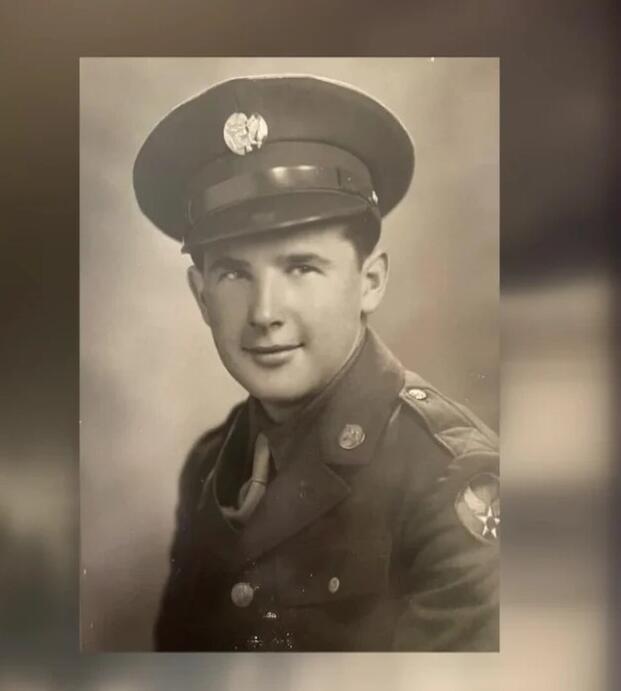
When Bukowski and Schrenk hopped into the cockpits of their B17s on Feb. 22, 1944, they didn’t realize their lives would soon change.
Bukowski suffered injuries when his plane was shot down.
“I lost my eye at that time and had a shrapnel wound, and I was knocked out,” Bukowski said.
Both pilots bailed out, deploying parachutes. The Germans grabbed Schrenk in Denmark, and Bukowski was captured in Germany.
“That’s amazing. We were practically shaking hands, and yet, we didn’t know each other,” Bukowski said.
They were sent to the same POW camp and subjected to the same deplorable conditions. Forced against their will, they were even subjected to an 86-day death march. Many of their comrades didn’t survive.
“We all had very severe dysentery, fleas, lice, and bed bugs. And, of course, the cold,” Schrenk said.
To make the situation worse, the march came during the infamous winter of 1944-45.
“Actually, they told us that it was the worst winter in many years. The coldest winter,” Bukowski said.
Finally Saved, End of the War
After more than a year in captivity, the veterans’ prayers were finally answered. Liberation day.
American troops liberated Burkowski about the time British soldiers freed Schrenk.
“Finally, for us, the war was over, and we were able to think of going home,” Bukowski said.
Both veterans were likely within earshot of each other as POWs and on the death march, yet more than eight decades passed before they could eventually meet.
As they started talking and swapping stories, old photos were passed around. That’s when they noticed another odd coincidence. Posing in flight crew photos, they’re positioned in the same spot – back row, second from left.
“We each brought our own memories back to each other,” Bukowski said. “We were together but didn't even know it.”
While so much time has passed since the days of 1944 and 1945, both Schrenk and Bukowski are in relatively strong health, physically and mentally.
“We are both quite mobile and can clearly remember what happened even 80-some years ago,” Schrenk said.
More recently, Schrenk flew back to Europe to visit some of the World War II battle sites. He told WBZ News in Boston that he’s traveled overseas before, which helped him heal and make amends with former enemies.
“After the war, actually tracking down the German pilot that shot me down, going to visit him, and becoming friends,” Schrenk said.





")

