


On the morning of Dec. 28, 1835, a single gunshot rang out in the central Florida wilderness. Chief Micanopy fired the initial shot before one hundred eighty Seminole warriors hidden in the shrubs opened up on 110 unsuspecting U.S. soldiers.
Soon after, 108 soldiers were dead. The Second Seminole War had begun.
Fewer than 2,000 Seminole warriors would find themselves facing an overwhelming army of 30,000 Americans. It became the longest, costliest and deadliest conflict the United States fought against any Native American tribe. Although the Seminoles suffered heavy losses and many were forced from their ancestral home, they never surrendered.

The Road to War
The United States and the Seminoles had already fought once before. Between 1817 and 1818, General Andrew Jackson led troops into Spanish Florida during the First Seminole War. His forces attacked Seminole villages and Black Seminole settlements as they pursued escaped slaves from Georgia and other states.
Unable to defend the territory, Spain ceded Florida to the United States in 1819. The U.S. took formal possession in 1821.
White settlers soon flooded into Florida. They wanted the fertile lands occupied by roughly 5,000 Seminoles in northern and central Florida. The Seminole nation had coalesced over the previous decades from Creek, Hitchiti and Miccosukee peoples who migrated south.
Florida sheltered hundreds of escaped slaves. Some lived in Black Seminole communities near Native towns. Others had intermarried into Seminole families. Many had been born free in Florida. By the 1830s, Black Seminoles numbered several hundred. They would form a crucial part of the resistance.
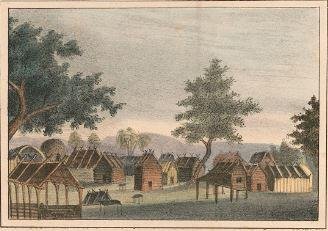
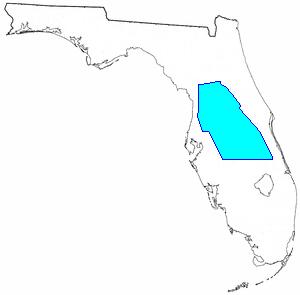
In 1823, the U.S. government forced Seminole leaders to sign the Treaty of Moultrie Creek. The treaty confined them to a four-million-acre reservation in central Florida. The government promised money and supplies to ensure their sovereignty. In return, white settlers could build roads through the reservation and hunt for escaped slaves.
The treaty was violated almost immediately. The government delivered supplies late or not at all. White settlers stole Seminole cattle. They encroached on reservation lands constantly. Slave hunters outright raided Seminole villages.
President Andrew Jackson then signed the Indian Removal Act in 1830. The law mandated the relocation of all eastern tribes, to be moved west of the Mississippi River. In 1832, U.S. negotiators met Seminole leaders at Payne's Landing. They demanded the Seminoles abandon Florida entirely. The Treaty of Payne's Landing gave them three years to move to Indian Territory in present-day Oklahoma.
Many Seminoles refused. Osceola, a young Creek warrior, became the most vocal opponent. At one meeting, he stabbed his knife into the treaty document. "My skin is dark, but not black!" he said. "I am an Indian, a Seminole. The white man shall not make me black. I will make the white man red with blood."
The treaty stated that Black Seminoles would remain in Florida. That meant slave hunters could reclaim them. For Osceola and many others, that was unacceptable. By late 1835, war was inevitable.
The Dade Massacre
Major Francis Langhorne Dade led 110 soldiers north from Fort Brooke near Tampa on Dec. 23, 1835. His command included troops from the 2nd and 3rd Artillery and 4th Infantry. They marched toward Fort King near present-day Ocala to reinforce the garrison as tensions escalated.
Seminole scouts shadowed every step. Dade knew enemy warriors were watching. He expected an ambush at each river crossing or in the thick woods. After five quiet days, he stopped posting flankers to watch the column's sides.
Just before 8 a.m. on Dec. 28, Chief Micanopy fired. His bullet killed Dade instantly. One hundred eighty warriors opened fire from the palmettos and trees. The first volley killed or wounded half of the American force.
Captain George Gardiner took command. The survivors built a log breastwork. They managed to hold for hours. Then the Seminoles launched a final assault in the afternoon.
By the end of the engagement, 108 of the 110 soldiers were dead or dying. Private Ransom Clarke and Private Joseph Sprague survived with severe wounds. A third man escaped but died the next day.
Halpatter Tustenuggee helped plan the ambush. "We had been preparing for this more than a year," he later said. "Just as the day was breaking, we moved out of the swamp into the pine-barren. I counted, by direction of Jumper, one hundred and eighty warriors."
On the same day, Osceola's warriors attacked Fort King. They killed Indian Agent Wiley Thompson and six others. Thompson had been enforcing Seminole removal. News of the massacres spread across the nation. Americans demanded military action.

Guerrilla War in the Swamps
Seminoles and Black Seminoles struck back hard in early 1836. War parties raided plantations along Florida's east coast and St. John's River. By February, they had attacked 21 plantations. Sugar mills burned. Enslaved people fled to join the resistance. White settlers were slaughtered.
Chief Micanopy led the overall resistance. Osceola became a powerful war leader. Jumper, Alligator and Coacoochee commanded their own warrior bands. Sam Jones, also called Arpeika, led his forces from deep in the Everglades. Halleck Tustenuggee directed operations in central Florida. Black Seminole leaders John Caesar and John Horse commanded an estimated 300 to 400 Black fighters.
American numbers built up steadily throughout the year. Meanwhile, a young Lieutenant with orders to report directly to the Commandant of the Marine Corps, Archibald Henderson, in Washington D.C. found a note pinned to his door.
The note read, “Gone to Florida to fight the Indians. Will be back when the war is over.”

General Thomas Jesup took command of all U.S. forces in late 1836. He noted the overall racial undertones of the campaign. "This is a negro, not an Indian war," he warned. "If it be not speedily put down, the south will feel the effects of it on their slave population."
Fewer than 2,000 Seminole warriors faced a U.S. force that grew to 30,000 troops. The numbers meant little. Florida's terrain gave the defenders the advantage. Swamps, sawgrass prairies and dense hammocks made conventional military operations nearly impossible. Summer heat and disease killed more soldiers than combat. Malaria and yellow fever probably caused most of the 1,500 American deaths during the war.
The Seminoles hid their families on remote islands in the Everglades. Warriors struck American troops in unsuspecting ambushes. They disappeared into the terrain where the American soldiers couldn't follow. They used feigned retreats to draw the pursuers into kill zones. They positioned themselves in dense tree islands surrounded by sawgrass and mud, forcing U.S. forces to advance across exposed ground.
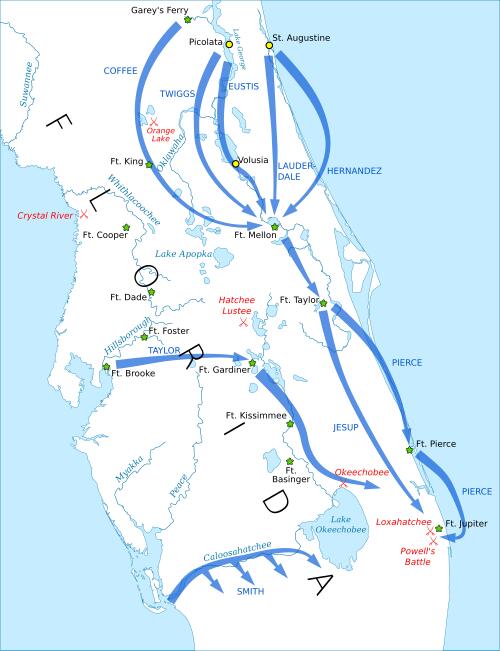
Multiple American commanders failed. General Duncan Clinch achieved little and resigned. General Winfield Scott tried coordinated columns, but his forces couldn't navigate the swamps or find the enemy.
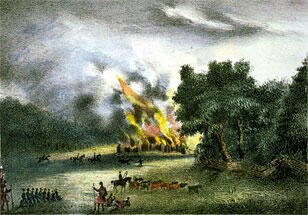
Jesup changed tactics. He built forts and supply depots across Florida. His troops conducted raids to destroy Seminole villages, crops and cattle. They confiscated roughly 15,000 cattle from the Alachua region alone. They burned corn fields and food stores. The strategy aimed to starve the Seminoles into surrender.
Major Ethan Allen Hitchcock served under Jesup. In February 1836, Hitchcock found the remains of Dade's command.
In his journal, he wrote, "The government is in the wrong, and this is the chief cause of the persevering opposition of the Indians, who have nobly defended their country against our attempt to enforce a fraudulent treaty."
The war ground on through ambushes and small skirmishes. The Seminoles besieged many of the forts for weeks. In July 1836, warriors trapped American soldiers in a Withlacoochee River blockhouse for 48 days. The soldiers endured brutal heat, disease and the constant threat of death.
Capture Through Treachery
In September 1837, American soldiers captured King Philip. Jesup had Philip send a message to his son Coacoochee to arrange a meeting. When Coacoochee arrived under a flag of truce, Jesup detained him. Coacoochee, also called Wildcat, was a rising war leader and one of the most prominent leaders the U.S. sought to capture.
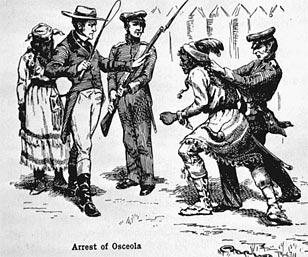
In October 1837, Osceola and another chief requested a meeting with Jesup to discuss peace. When they arrived under a white flag, Jesup's troops seized them. The American public condemned the violations. Jesup transferred Osceola to Fort Moultrie prison in South Carolina. Osceola refused to accept any removal agreement.
On Jan. 30, 1838, he died at age 34 from throat inflammation. The attending physician beheaded his corpse.
Coacoochee was imprisoned at Fort Marion in St. Augustine. The fort was considered escape-proof with five-foot-thick walls and an old Spanish moat. But Coacoochee and 19 other prisoners squeezed through a narrow window in their cell.
He later recalled, "With much difficulty I succeeded in getting my head through; for the sharp stones took the skin off my breast and back." They descended by rope to freedom before daybreak.
Coacoochee's escape energized the resistance. He became the Seminoles' most important remaining leader. His band included hundreds of Seminole and Black Seminole warriors. U.S. military records noted that when American soldiers learned Coacoochee was in an area, they stopped their operations. His reputation as a fierce warrior leader weighed heavily on the soldiers' minds.

Christmas Day at Lake Okeechobee
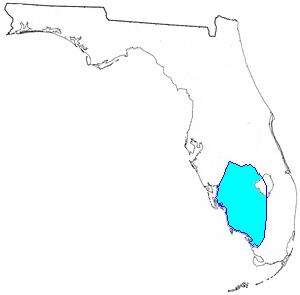
Colonel Zachary Taylor led 800 troops against Seminole and Miccosukee warriors on Christmas Day 1837. Between 380 and 480 warriors camped on Lake Okeechobee's northeast shore. They positioned themselves in an area surrounded by sawgrass and mud. Coacoochee, Sam Jones and Alligator led the Seminole forces.
Taylor ordered a frontal assault. Missouri volunteers went in first. The warriors opened fire. The volunteers broke and fled. Colonel Richard Gentry fell mortally wounded.
Taylor sent in the 6th Infantry. Five companies took devastating casualties in the sawgrass. Every officer but one died or was wounded. Most noncommissioned officers fell. Only four men from those companies survived unharmed.
The 4th Infantry finally pushed the warriors from their position. They escaped across the lake that night. Taylor lost 28 killed and 112 wounded. The Seminoles left 12 dead. Later accounts from Native participants indicated another 11 were wounded.
The American press called it a great victory. Following this and his later service in the Mexican-American War, Taylor became a national hero and eventually president. Though he had suffered severe casualties while killing relatively few enemies in Florida. The Seminoles escaped deeper into the Everglades and kept fighting.

The War Drags On
In March 1837, Chief Micanopy had agreed to stop fighting. Hundreds of Seminoles gathered near Fort Brooke to await transport west. But on June 2, warriors led by Sam Jones attacked and managed to free them. They disappeared into the wilderness.
This would go on for years. Groups of Seminoles would surrender and gather before being transported west. Then they would escape and rejoin the fight. Others were hunted down. Their villages were destroyed.
Coacoochee fought on until 1841. When he finally faced capture again, he said, "I was in hopes I would be killed in battle, but a bullet never reached me."
Before his forced removal to Oklahoma, he delivered a speech that captured what he believed the war had been about.
"I have said I am the enemy to the white man," he said. "I could live in peace with them, but they first steal our cattle and horses, cheat us, and take our lands. The white men are as thick as the leaves in the hammock; they come upon us thicker every year. They may shoot us, drive our women and children night and day; they may chain our hands and feet, but the red man's heart will be always free."
The War Ends
By 1842, the United States had spent more than $20 million fighting the Seminoles. That represented roughly 10 percent of the federal budget. More than 1,500 soldiers had died, mostly from disease. Hundreds of civilians also died. The government forcibly removed 3,000 Seminoles to Indian Territory in Oklahoma.
The nation was appalled at the outcome.
But several hundred Seminoles remained on remote Everglades islands. The military never defeated them. On Aug. 14, 1842, the government declared the war over. No peace treaty was ever signed.
A third conflict erupted in 1855. The final Seminole War lasted until 1858. Constant military patrols and bounties reduced Florida's Seminole population to roughly 200 individuals. The Seminoles who stayed never surrendered. They survived on land that white settlers considered worthless.
Their descendants formed the Seminole Tribe of Florida, which today numbers more than 4,000 members.
Soldiers killed in the Dade Massacre and the subsequent battles rest beneath three coquina pyramids at St. Augustine National Cemetery. More than 1,300 soldiers are buried there. The cemetery dedication occurred on Aug. 14, 1842, the day the government declared the war over.
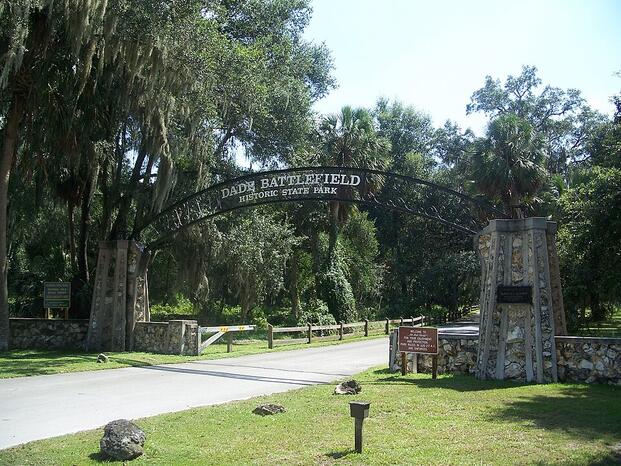
The Dade Battlefield Historic State Site near Bushnell preserves where Dade and his men died. Annual reenactments mark the anniversary. The site commemorates America's longest and deadliest war against the Native Americans. It was a seven-year conflict the United States never truly won.


.")



