

In late December 2025, the U.S. Navy announced plans to pursue a new class of large surface combatants described as Trump-class battleships, marking the first time in decades the service has publicly used the battleship designation for a future platform. The Golden Fleet announcement came during a White House event outlining broader naval expansion goals and signaled a potential shift in how the Navy approaches surface firepower and fleet composition.
President Donald J. Trump was joined by senior Navy leadership and Defense Department officials during the announcement, framing the new ships as part of a wider effort to expand U.S. maritime strength amid growing global competition at sea. The administration described the initiative as a long-term investment in surface combatant lethality rather than a short-term procurement decision.
What the Navy Has Confirmed
According to the Navy’s public statements, the first ship in the new class will be named USS Defiant. Officials described the vessel as a heavily armed surface combatant designed to deliver long-range strike capabilities well beyond those of existing destroyers and cruisers. The Navy has not released formal specifications, cost estimates, or a detailed acquisition timeline.
Navy leaders said the ship would integrate advanced weapons and sensor systems and would be capable of operating alongside carrier strike groups and surface action groups. The announcement emphasized firepower, survivability, and magazine depth as defining characteristics of the new class.

How the Battleship Concept Differs From Today’s Fleet
The Navy’s current surface fleet relies primarily on Arleigh Burke-class destroyers and Ticonderoga-class cruisers for surface combatant missions. These ships are designed as multi-mission platforms, capable of air defense, anti-submarine warfare, and land attack, but they are limited by missile capacity and overall size.
By contrast, Navy officials and defense analysts have described the new battleship concept as prioritizing sustained offensive firepower. A significantly larger hull would allow for a greater number of vertical launch cells, expanded command-and-control facilities, and increased survivability in scenarios where missile expenditure rates are expected to be high.
Historical Context for the Return of the Battleship Label
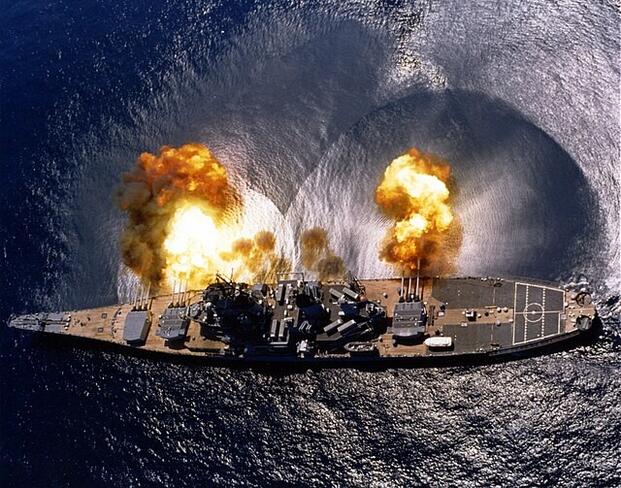
The U.S. Navy last operated battleships during the Cold War, with the Iowa-class ships decommissioned in the early 1990s. Those ships combined heavy armor with large-caliber naval guns and were later adapted to carry cruise missiles before retirement. Since the Iowa-class retired, Navy survivability thinking for surface combatants has emphasized stealth, electronic warfare, and offensive lethality rather than battleship-style heavy armor.
The modern battleship concept differs substantially from its predecessors. Rather than relying on big guns and thick armor, the new design appears oriented around missile capacity, sensors, and networked warfare. The revival of the battleship designation is therefore symbolic as much as functional, signaling a return to concentrated surface firepower rather than a resurrection of historical designs.
What Is Still Undecided
The Navy has not disclosed how many ships it intends to build, where they would be constructed, or how the program would be funded. Attention will be focused on the first two vessels, which are supposed to be part of a batch of ten. Officials said there could end up being as many as 20-25 ships by the time the project is finished.
Shipbuilding analysts have noted that introducing a new class of very large surface combatants may place additional strain on an already stretched U.S. shipbuilding industrial base. Existing yards are currently committed to aircraft carriers, submarines, destroyers, and frigates, all of which face schedule and cost pressures.
How This Fits Into Broader Naval Strategy
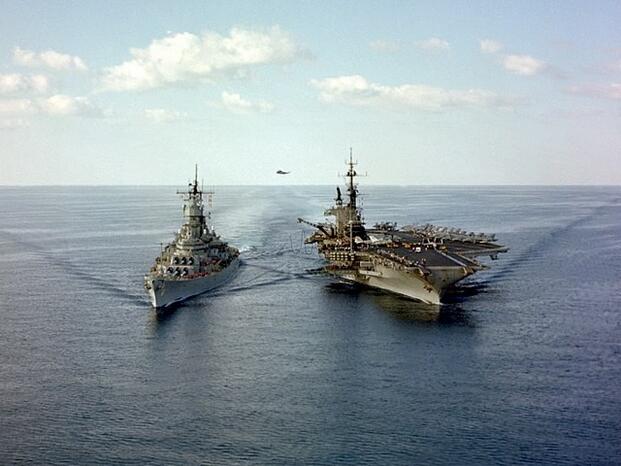
Navy leaders have indicated the new battleships are not intended to replace aircraft carriers or submarines, which remain central to U.S. naval power. Instead, the ships are envisioned as complementary platforms that could provide additional strike capacity and command capability in contested maritime environments.
The announcement aligns with broader Navy efforts to expand the fleet and address concerns about force structure, readiness, and deterrence. It also reflects a growing emphasis on preparing for high-end conflict scenarios rather than counterinsurgency or low-intensity operations.
Naval Naming Traditions and a Break From Custom
U.S. Navy naming practice has traditionally favored geographic names, historic battles, or individuals who have died, and while exceptions exist, naming a ship or class after a living person has historically been uncommon and sometimes controversial. Another long-standing convention is that the first ship of a new design gives its name to the class itself, as with Arleigh Burke-class destroyers named after USS Arleigh Burke.
In announcing the new battleship program, President Donald Trump embraced the departure from custom, saying the ships would be “the best, the biggest, and the most powerful ships ever built” and he was “making ships great again,” underscoring both the symbolic intent of the naming choice and the administration’s emphasis on scale and dominance.
Why the Announcement Matters
If pursued, the new battleship program would represent one of the most significant changes to U.S. surface fleet design in decades. It would signal a willingness to invest in large, specialized combatants at a time when the Navy has emphasized flexibility and multi-mission platforms.
At the same time, the lack of detail underscores how early the program remains. The announcement establishes intent rather than a finalized acquisition plan, leaving key questions about cost, feasibility, and strategic value unresolved. How Congress, the shipbuilding industry, and future administrations respond will determine whether the battleship concept moves from rhetoric to reality.