

The U.S. Navy and the U.S. Coast Guard are jointly preparing an updated supplement to a 2015 environmental impact statement regarding training and testing in the Northwest. The purpose is to assess potential environmental impacts of proposed at-sea military actions and activities.
The official name is the “Northwest Training and Testing Final Environmental Impact Statement/Overseas Environmental Impact Statement and the 2020 Northwest Training and Testing Final Supplemental EIS/OEIS.”
The Navy is the lead agency with the Coast Guard participating due to the inclusion of its similar training activities.
According to a joint press release, the military groups are asking the public, stakeholders, and federally recognized tribes to comment on the scope of the impact statement, including “identifying potential alternatives or issues that should be addressed … relaying environmental concerns, identifying historic in-water properties, and providing information or analysis relevant to the proposed action or the project’s potential to affect historic in-water properties” as defined in the National Historic Preservation Act.
The Navy and Coast Guard are accepting comments through a 45-day scoping period that began on Dec. 5 and ends Jan. 19.
At-sea military readiness activities include training, research, development, testing, and evaluation activities, range modernization and sustainment, occurring on and beneath the water surface and in the airspace in the designated area.
The purpose of “the Proposed Action” is to ensure the Navy and Coast Guard are able to organize, train and equip service members and personnel needed to meet their respective national defense missions in accordance with their Congressionally mandated requirements.”
Proposed at-sea military readiness activities may include: active sonar, explosives, and other sources of sound. The Navy and Coast Guard would continue to employ mitigation measures when conducting at-sea activities to reduce or avoid potential adverse effects on marine species. The Navy and Coast Guard will seek the reissuance of federal regulatory permits and authorizations under the Marine Mammal Protection Act and consultations under the Endangered Species Act to support at-sea military readiness requirements within the Study Area beyond November 2027, which is when current permits and authorizations expire. The Navy and Coast Guard will coordinate and consult as required by all laws and regulations determined to be applicable to the project.
The “Study Area” does not include any land or overland airspace and consists of three areas: 1) areas offshore of the Washington, Oregon and Northern California coasts; 2) inland waters of Washington; and 3) Western Behm Canal in Southeast Alaska.
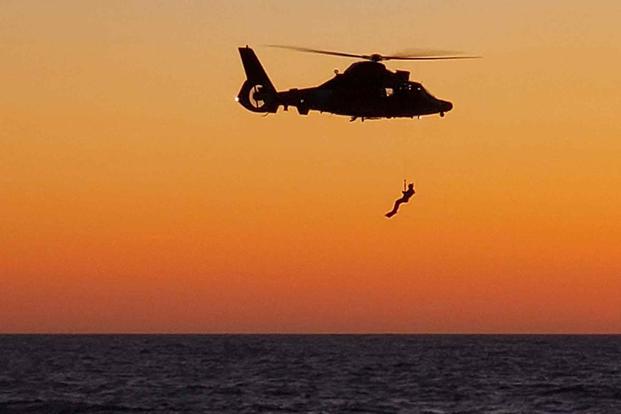
According to a U.S. Coast Guard spokesperson, the proposed action may expand the Coast Guard’s proposed activities, “providing the Coast Guard and the Navy with an excellent opportunity to work together to meet our national defense and security missions while being protective of the marine environment. This analysis will cover highly varied Coast Guard testing and training activities directly tied to the Service’s multiple missions, including national security, such as gunnery exercises, maritime security operations, and search and rescue.”
The Astorian reached out to Julianne Leinenveber, Public Affairs Specialist, Commander, Navy Region Northwest for more clarification on the matter. The following conversation has not been edited.
What does this mean for people in Astoria and in the region at large?
The U.S. Navy and U.S. Coast Guard are jointly preparing a supplement to the 2015 Northwest Training and Testing (NWTT) Final Environmental Impact Statement/Overseas Environmental Impact Statement (EIS/OEIS) and the 2020 NWTT Final Supplemental EIS/OEIS to analyze the potential effects associated with continuing at-sea military readiness activities in areas offshore of Washington, Oregon, and Northern California; inland waters of Washington; and the Western Behm Canal in Southeast Alaska.
To be clear, this is not a new action. These military readiness activities have been occurring for decades across the region.
This document will support the Navy’s request for the reissuance of federal regulatory permits and authorizations under the Marine Mammal Protection Act and the Endangered Species Act to support at-sea military readiness activities beyond 2027, when current permits will expire.
For Astoria in particular, this means there likely will not be a noticeable difference because the Navy and Coast Guard do not intend to change where activities would occur in the future. We currently do training and testing activities beyond 12 nautical miles from the Oregon coast.
What are some of the activities planned for this and why?
The proposed military readiness activities include training; research, development, testing, and evaluation (referred to as “testing”) activities; and modernization and sustainment of ranges.
These proposed military readiness activities are similar to those that have occurred for decades in the Pacific Northwest and Southeast Alaska, which have diverse environments with sufficient sea and airspace for safety and training realism. Additionally, these areas are located near Navy and Coast Guard units based in the region.
The forthcoming Draft Supplemental EIS/OEIS will analyze in-water training activities within the NWTT Study Area, to include operating aircraft, ships, and submarines; operating unmanned aerial or undersea vehicles; firing weapons at targets; detecting and locating submarines; finding and neutralizing in-water practice mines during underwater explosive detonation training; practicing vessel visit, board, search, and seizure; and practicing disaster and humanitarian response efforts.
Testing activities may include basic and applied scientific research and technology development; testing, evaluation, and maintenance of sensors and systems, such as missiles, torpedoes, radar, active and passive sonar systems, vessels, submarines, and aircraft; and the acquisition of technologically advanced vessels, aircraft, and systems.
Range modernization and sustainment activities would include the maintenance, replacement, and installation of in-water instrumentation and infrastructure for the Southeast Alaska Acoustic Measurement Facility (SEAFAC) near Ketchikan, Alaska, as well as the replacement of in-water array towers and the installation of cables and hydrophones in Dabob Bay, Washington. Range modernization and sustainment is needed when existing components of the ranges require maintenance, replacement or modifications to support testing and training with new technologies, weapons, and systems capabilities.
Where will this testing take place?
The Navy and Coast Guard’s proposed at-sea military readiness activities would occur on and beneath the water surface and in the over-water airspace offshore of the Washington, Oregon, and Northern California coasts; inland waters of Washington; and the Western Behm Canal in Southeastern Alaska. Activities along the Oregon and California coasts would continue to occur 12 nautical miles or further from shore.
When you ask for “public stakeholder and tribal input” what do you want to see and what have you seen in the past?
We are currently in the scoping phase for this effort as part of the National Environmental Policy Act requirements. This stage serves as an opportunity for the public, stakeholders, and federally recognized tribes to provide early substantive input on the Navy and Coast Guard’s proposal to continue military readiness activities in this area.
The Navy and Coast Guard welcome, value, and appreciate comments from the public, key stakeholders, and federally recognized tribes during the 45-day scoping period, which is open from Dec. 5, 2025, to Jan. 19, 2026. A substantive comment could address the scope of the Draft Supplemental EIS/OEIS, to include identifying potential alternatives or issues that should be addressed in our analysis; sharing environmental concerns; or providing details about newly available science that should be considered.
We will consider scoping comments during the development of the updated Draft Supplemental EIS/OEIS, which is anticipated for release in Fall 2026. Once the document is prepared, the Navy and Coast Guard will implement a robust public outreach effort to inform the public about the details of the Draft Supplemental EIS/OEIS, answer questions, and solicit feedback on the analysis.
During previous rounds of outreach, we have received comments that helped to inform studies to consider, types of mitigations, and other concerns from the public about the potential impact of these military readiness activities on the marine environment and marine species.
It is important to note that the Navy and Coast Guard strive to be protective of the marine environment and species during at-sea activities.
To that end, the Navy implements numerous mitigation measures to minimize potential effects on marine species, including using trained Lookouts and acoustic detection to monitor for their presence, and powering down or shutting down sonar, or ceasing explosive use, if marine species are observed in mitigation zones.
The Coast Guard has statutory missions that are protective of the environment. These statutes include living marine resources (fisheries enforcement), marine safety, aids to navigation, law enforcement at sea, marine environmental protection, and search and rescue.


