


Joseph Henry Suina grew up in a Native American community in the 1940s, buried by his own people’s trauma while not yet realizing the baggage he carried.
Suina, 81, is a U.S. Marine Corps veteran who was born in 1944 and served two tours in Vietnam. He grew up in the federally recognized pueblo of Cochiti, in New Mexico, son of a father who was a World War II veteran. The “simple” way of life entrenched in the community nuzzled between Albuquerque and Santa Fe shaped his entire life—and still does.
“Growing up here on the reservation back in the ‘50s, things were very different,” Suina told Military.com. “We were still a very remote community. There were disparities between societies at that point in time, including racism still [being] pretty heavy.
“And of course, Native people were at the tail end of some of these happenings back then. So, no one thought that Native people could even go to college at that point in time and so forth. I wanted to see the world.”
After graduating high school in 1962, Suina realized that the quickest way to reach his aspirations was to join the military. It wasn’t uncommon in Cochiti, where approximately 400 people lived at that time including 33 military veterans who composed about 10% of the pueblo’s overall population.

Suina said those World War II veterans “made the ultimate sacrifice” and honorably represented their community that, along with its people, has a long and complicated history.
“I'm often asked, ‘If Native people suffer historical trauma in various ways, how come so many Native people join the service?’ And it's still true today,” he said. “More Native people than any other ethnic group per capita have served the military and continue to serve the military.
“Today, of course, many more female military veterans are around everywhere in Indian country. I think it is because this is our country and will always be our country.”
Life After War
Suina first served in Vietnam in 1964 as part of what he described as search-and-destroy missions.
He was discharged the same year but just months later “things started to heat up.”
“Like it or not, we had to go back,” Suina said. “It wasn't voluntary for me, but when you're in the service—especially in the Marine Corps—you have no choice. They sent you wherever they need.
“So, I went back again. At that point in time there were much more action to be had just about everywhere in Vietnam.”
He was discharged again in 1966 and ultimately left the Corps. He sustained injuries including a bullet that hit his leg, along with shrapnel in his chest area and across his neck which led to some scarring.

But it was the wounds beneath the skin that labored not for weeks or months but years and decades.
“Vietnam veterans suffered yet another layer, and that had to do with guilt because the United States population, the government, and everywhere [else] did not recognize us as having done something for the country,” he said. “In fact, we were baby killers, you name it, any number of things during the ‘60s—the hippies and all sorts of other folks were demonstrating against the war.
“We came home not very proud, to say the least, and I kept a low profile for all those years even though I had a Purple Heart and had a decoration with the Vietnamese gallantry cross. I guess those are things to be proud of, but I never took it out because I was ashamed on top of already feeling guilty that I came home.”
Suina also felt guilt just for being alive. Even among his peers who survived the war, he to this day wonders why he isn’t living daily in a wheelchair or why he has his eyesight.
The Next Chapter
Suina’s post-military life included marriage and a child born a year later.
While attending college and gaining higher education, he realized he had a passion for not just learning but teaching.
After receiving his degree from Fort Lewis College in Durango, Colorado, for humanities and a minor in education, he worked for the Bureau of Indian Affairs’ education department prior to teaching elementary school in Laguna and Acoma.
After seven years there he went to graduate school, got his master's degree and eventually his doctorate. He then joined the faculty at the University of New Mexico, where he taught for about 28 years.
Healing From PTSD
But even with a family and his teaching background, Suina suppressed many emotions over the decades.
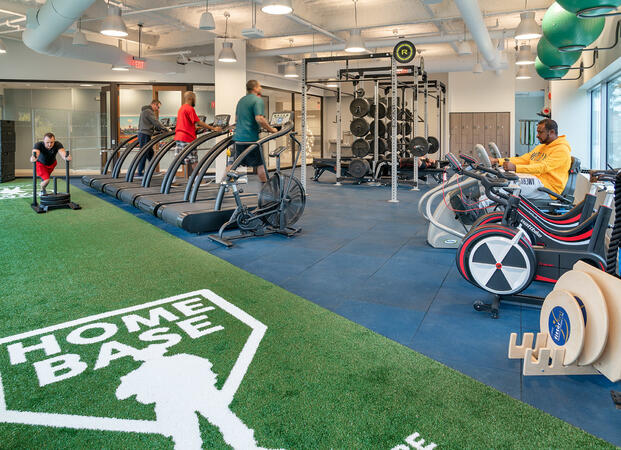
That is what led him in 2023 to partake in the Home Base Native American Intensive Clinical Program (ICP), which provides healing and lifesaving care to Native American veterans, service members and their families.
The program, supported by the Bob Woodruff Foundation (BWF), involved Suina traveling from his tribal community to Boston—where he spent two weeks in intensive therapy alongside other Native veterans.
The mission was purposeful and necessary considering the statistics. About 1-in-3 American Indian Vietnam veterans who served in-country suffered from full or partial PTSD [post-traumatic stress disorder] at the time of a 1988 study conducted by the National Center for PTSD. That translates to PTSD prevalence for American Indians being more than twice as high as for white or Japanese American Vietnam veterans.
Nearly 40 other studies examined over the years by the National Institutes of Health back up such data, finding that American Indians and Alaska Natives “experience a substantially greater burden of PTSD and related symptoms than U.S. whites,” with combat experience and interpersonal violence consistently cited as leading causes of PTSD and related symptoms.
Suina grew up with an alcoholic father who routinely was combative with his mother, forcing him as the oldest child in the family to be the protector and caretaker. Those feelings of fear, guilt and depression followed him long after he left home and built a new life.
As he put it, it wasn’t necessarily his personality that was troublesome but more so how his highs and lows were so “extreme.”
“Home Base doesn't make a distinction; PTSD is PTSD, whether you're carrying your history or if it happened to you in the military,” Suina said. “As long as you're a veteran, they'll attend to you.”

Air Force veteran Marcus Denetdale, regional associate director for Southwest & tribal relations at Home Base, told Military.com that the Native ICP is about more than expanding access to quality and providing lifesaving mental health care. Rather, it’s about meeting Native veterans “where they are and delivering care that honors their lived experience.”
Abby Vankudre, program officer at the Bob Woodruff Foundation, told Military.com that their partnership with Home Base is an investment in ensuring that evidence-based treatments are accessible.
“The Home Base team recognizes the complex history of the Native American and Indigenous veteran population and have structured the program to build trust,” Vankudre said. “Their staff receive native cultural competency training, engage in daily consultation with a Native veteran and a Native psychologist, and incorporate cultural practices into the program including medicine bundles, talking circles, and opening and closing blessings so that participants can focus on healing.”
Mental Health Care 'For the First Time'
Home Base was a pivotal experience in the life of Suina, who said that upon his return home he discussed things with his wife and children that he never had before.
The trauma he explored among the 22-person cohort in Boston included coming to terms with not just his own past but that of his family and people.
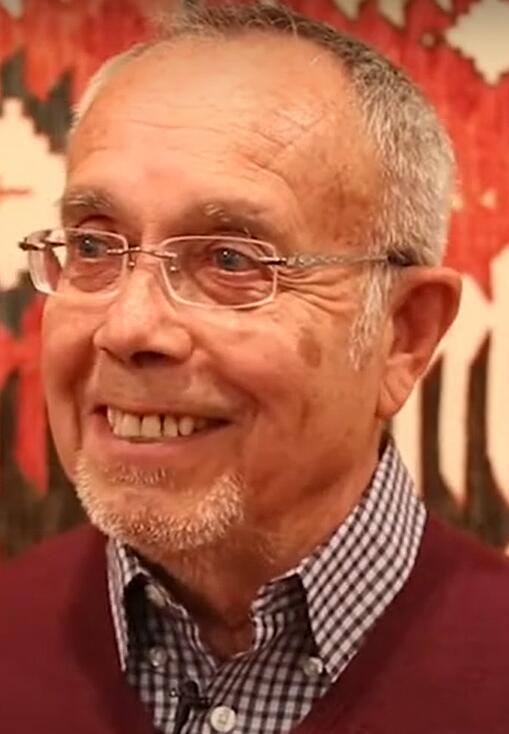
“For the first time in my life, after all these years of being out of the service, I really got serious attention to my problem of PTSD,” Suina said. “I started to learn about myself and some of the historical trauma that I was already carrying, probably even before military service, having to do with my dad who came home shell-shocked at that time.”
Today, efforts for more traction in Native communities are growing—whether that means bringing professionals to Apache communities, or individuals like Suina using their own life experiences to positively impact others seeking answers.
“I value life a whole lot more,” he said. “It's one of those things that we don't appreciate on a daily basis, and the human body is just incredible…and gosh, we need to appreciate and take care of it the best we can because it can go at any time.”

")





