


America is at war on the border. The Pentagon again calls itself the Department of War. Fentanyl is treated like sarin. Veterans sleep in tents while a promised mega-campus waits to be built in Los Angeles.
President Donald Trump spent 2025 rewriting the country’s rules of war. Orders out of Washington put troops on the southern border under an invasion mission. They revived the Department of War name at the Pentagon, treated fentanyl like a battlefield weapon, pushed U.S. Space Force toward combat in orbit, and have promised 6,000 beds for homeless veterans in Los Angeles. The shift reaches from the Rio Grande to the moon, pulling the military deeper into border security, drug policy, space and homelessness as Trump has navigated from campaign rhetoric to a more stringent national security doctrine.
Trump’s 2025 agenda didn’t just change policy; it redrew the map for how the administration defines threats. Synthetic opioids, homelessness, migration and lunar exploration now sit inside the same national security conversation as carrier groups and missile defense, reframing domestic issues as potential fronts in broader conflict.

Congress has not passed legislation reversing or codifying the Department of War renaming or related directives. Committees in both the House and Senate requested 2026 briefings on border deployments, fentanyl policy, lunar infrastructure, and use of Title 10 powers in nontraditional missions. The upcoming year will test whether the directives become durable doctrine through budgets and case law, or remain executive experiments vulnerable to judicial review or political reversal.
Supporters said the new objectives delivered clarity about how the administration plans to project strength. Critics, however, have argued that the "war" framing blurs legal lines on domestic deployments and centralizes military power in crises historically handled by civilian agencies.
The Pentagon's Rebranding
In September, Trump signed the executive order Restoring the United States Department of War authorizing the Defense Department to revive its pre-1947 name in seals, signage and policy documents. The statutory title remains Department of Defense. Only Congress can formally change it.
The order encourages commanders and civilians to lean into “war” language that, according to a senior defense official, “reflects the world as it is, not as we wish it to be.”
Retired officers say the renaming could shape how missions are described to Congress and in internal documents even without statutory change. Legal scholars told Military.com it sits in a gray zone where posture can shift without altering the letter of the law, depending on how broadly the terminology appears in guidance.
Congressional Democrats pushed for hearings to determine whether the renaming affects funding or war powers. Republicans signaled support for cultural clarity but stopped short of endorsing a formal rewrite. Hearings are expected early in 2026.
Southern Border: A Military Mission
An April 2025 national security memorandum titled "Military Mission for Sealing the Southern Border of the United States and Repelling Invasions" ordered active-duty and reserve forces to support Border Patrol, build infrastructure, and treat mass crossings as an “invasion” threatening U.S. sovereignty.
The order places federal troops under Title 10 authority and allows state-controlled Guard units when approved by governors.
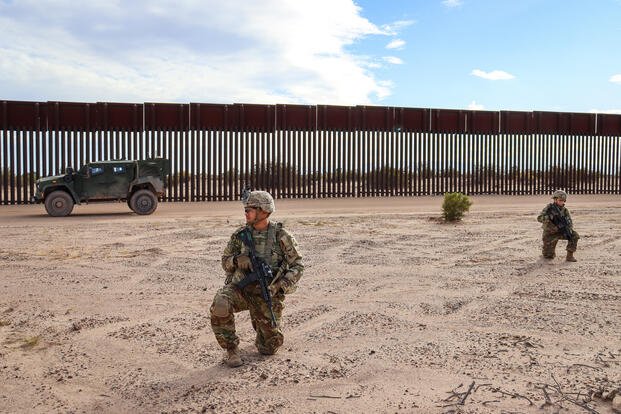
In early 2025, the Pentagon ordered about 3,000 additional active-duty troops to the U.S.–Mexico border to support broader security operations that include helping border agents and improving surveillance infrastructure.
Troops now assist with surveillance, engineering and airspace monitoring tied to radar networks near the Rio Grande. Northern Command reports reviewed by Military.com describe the assignment as a long-term security operation.
The administration has argued in public remarks that border conditions warrant extraordinary measures, though it has not released detailed rules of engagement or an end date. Civil liberties attorneys interviewed by Military.com warn the “invasion” framing could expand use-of-force justifications, depending on how commanders interpret it.
Mexican officials have publicly expressed concern that regional deployments could spill into broader pressure.
Supporters say the mission matches emergency conditions. Immigration groups say the approach risks militarizing migration and weakening Posse Comitatus norms. Members of Congress from both parties requested briefings on rotation schedules and withdrawal criteria.
Los Angeles' Military-Scale Veterans Campus
Trump’s executive order in May, "Keeping Promises to Veterans," directs the Department of Veterans Affairs (VA) to build a campus for homeless and at-risk veterans at the West Los Angeles VA Medical Center. Los Angeles has roughly 3,000 homeless veterans—the highest concentration in the country—and the order cites the crisis as evidence that traditional approaches have failed.

Plans indicate capacity for up to 6,000 beds by 2028, with on-site mental health care, job training and addiction services.
VA Secretary Doug Collins said the order “will enable us to ensure VA’s West Los Angeles Campus is being used as intended: to benefit Veterans,” describing the goal as helping veterans “find housing and support and start their journey back to self-sufficiency”.
Advocacy groups welcome the housing push but say expanded firing authorities in the same order could weaken oversight. They have requested clarity on funding and schedule guarantees.
Lawmakers requested 2026 briefings on zoning waivers and whether the model should expand to other cities including Phoenix, Las Vegas and New York.
Fentanyl Got WMD Status
In December, Trump designated illicit fentanyl and some precursors as weapons of mass destruction for policy and response purposes—allowing the Pentagon, Department of Homeland Security and the Department of Justice to coordinate as if responding to a chemical agent.
The designation does not change the substance’s chemistry or classification under international law. Rather, it places fentanyl inside national security authorities typically used for large-scale threat coordination and sanctions.
Following the designation of fentanyl as a weapon of mass destruction, federal agencies signaled a broader crackdown on the drug that expands tools for law enforcement and national security coordination against trafficking.
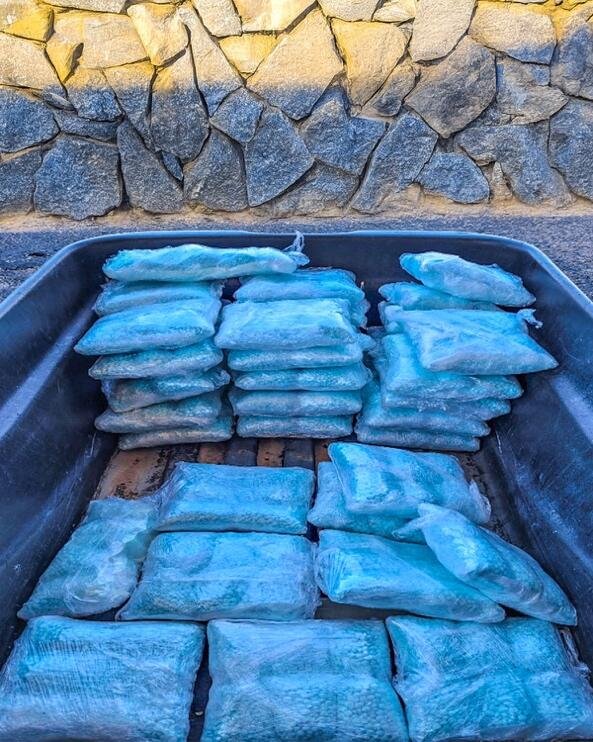
Trump called the crisis a battlefield-scale threat, saying fentanyl “is a national emergency, and we are treating it as such.” Analysts say the status could allow overseas interdiction arguments and intelligence sharing while noting that the order does not grant new war powers.
Some public health officials have expressed caution, warning that the policy risks treating overdose spikes like battlefield incidents rather than medical emergencies.
Space as a Warfighting Mission
Trump’s executive order, "Ensuring American Space Superiority," directed the U.S. Space Force to prepare for “active combat operations” in orbit if necessary.
The directive shifts space from a support function to a potential combat arena by prioritizing missile defense systems and satellite tracking from low Earth orbit through cislunar space, according to analysts. The order does not create new authorities yet signals an intent to apply existing Title 10 powers to space missions if conditions evolve.

The order sets goals to land astronauts on the moon by 2028, as well as to build an initial lunar outpost by 2030.
Civilian scientists have expressed concerns that research budgets could drop as defense priorities rise. Defense analysts, in turn, cited concerns about Chinese and Russian anti-satellite testing. Critics question whether funding or oversight structures exist to support combat readiness in orbit.
Congressional committees are preparing 2026 hearings to clarify oversight and the order’s international implications.


")




