


Sudden cardiac arrest continues to claim the lives of young servicemembers far too often, standing as the primary non-traumatic cause of death across the U.S. military. Older studies of recruits documented rates as high as 13 sudden cardiac deaths per 100,000 person-years, while more recent Department of War figures from fiscal years 2016 to 2019 show about 5.9 incidents per 100,000 person-years for those aged 17 to 24 (per report “Tactical vs. Competitive Athletes: Closing the SCA Gap” by the American College of Cardiology).
A large percentage of these events tie directly to physical exertion, with tactical demands like heavy gear, extreme environments, and unpredictable bursts of activity driving higher risks compared to competitive athletes.
College sports provide a stark contrast. NCAA athletes face sudden cardiac death rates around 2.3 per 100,000 athlete-years, notably lower than military recruit figures even before widespread mitigation efforts. Experts attribute part of that gap to the ability of competitive programs to implement comprehensive emergency action plans, including on-site automated external defibrillators (AEDs) and rehearsed protocols that have helped reduce deaths over time. Tactical settings, however, often operate in austere conditions where such plans prove harder to execute consistently.

Lion Heart Heroes
The Lion Heart Heroes Foundation has spent more than a decade highlighting these disparities and advocating for change. Founder Laurie Finlayson launched the organization after her son, Marine Lance Corporal David Finlayson, collapsed in Sudden Cardiac Arrest when his heart went into a bad rhythm during a five-mile training run in Hawaii in November 2013. He was 25, and immediate revival attempts failed.
From the start, the foundation pursued two main objectives: initial entry heart screening and AED access at training sites. Early efforts focused heavily on electrocardiogram (ECG) testing, with the group pushing in 2019 for EKGs before boot camp to identify hidden risks that standard exams might miss. That advocacy gained traction as services grappled with preventable losses.
Incremental Successes
By 2020, the Navy moved to reinstate advanced medical screening for incoming midshipmen at the U.S. Naval Academy. While the screening at the Naval Academy is only a first step, it still highlights recognition that history and physical exams alone leave gaps.
“The Naval Academy was a foot in the door and is a huge success story for implementing early screening,” said Laurie Finlayson.
Similar concerns have surfaced across branches, with over 200 active-duty personnel experiencing cardiac arrests annually in recent years, affecting readiness in the Army, Air Force, and other components alongside the Marines.
Those steps paved the way for legislative progress. The foundation worked with lawmakers to include cardiac provisions in National Defense Authorization Acts, starting with pilot ECG programs at service academies and expanding to broader testing for new accessions. The FY25 NDAA directed a report on AED availability during physical training, a measure the group views as critical for closing persistent gaps. Supporters note that swift CPR and defibrillation can push survival rates above 70 percent for younger victims, yet delays remain common in field or remote training areas across the services.
“ECGs are simple, inexpensive, and take less than 5 minutes, whereas a military death can cost hundreds of thousands of dollars and have devastating consequences for military units and families, and possibly harm readiness.” (2023 letter to Congress representing Laurie Finlayson)
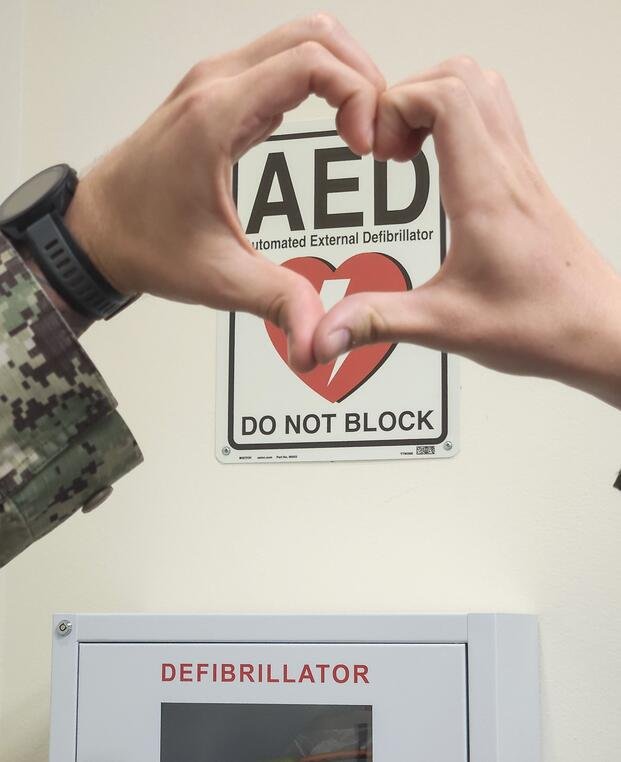
Marine Corps guidance promotes AED placement in facilities and provides training, but requirements stop short of mandating devices for every outdoor evolution or unit run. The organization points to cases where quick access made the difference, while arguing that Marines in intense training deserve the same rapid response tools seen in other high-risk professions.
New Initiatives
Initiatives like the ERASE pilot program (ECG Risk Assessment to Reduce Sudden Cardiac Events) have screened thousands of service members across the War Department, identifying genuine risks with minimal false positives and allowing most to stay on duty. Genetic testing has also helped families understand losses after the fact. From the foundation's viewpoint, these advances complement but do not replace the need for immediate lifesaving equipment where exertion happens.
Finlayson and the foundation maintain steady contact with military leaders and Congress, sharing data and personal stories to underscore the human and operational costs. As fitness standards tighten across the force for current threats, the group continues pressing for AEDs as a standard part of training preparations.
Recent NDAA language has kept the issue in focus, but still represents years of incremental gains. The foundation is pending an ongoing report requirement as another opportunity to highlight what data already shows about risks during physical training.
For more information on Lion Heart Heroes Foundation, visit their website at lionheartheroes.org.
Related: US Military Pilot Program to Screen New Recruits for Heart Conditions Under Proposed Defense Bill


")


